
 Estimated reading time: 20 minutes
Writing a book is a real achievement. Many authors have been working on their book over a lifetime and are eager to see their work in print and to be read. Unfortunately, scammers are pros at exploiting that strong desire to be published, manipulating authors wanting to give birth to their project. You can avoid a publishing scam simply by increasing your awareness of just a few basic tactics.
In fact it can be simpler than that. The one rule that will likely protect you: don’t use a foreign company. This will reduce the chance of being scammed significantly. You’ll need to dig down into the company’s information because location and ownership can be opaque. One company proudly flaunts that they have an Australian Post Office box and an ABN number (as if that proves location). And they include the word “Australian” in their name and an image of a kangaroo on their website. Another simply uses a web address with and Australian .au – a copy of their Canadian website, and based in “Victoria”, but Victoria Canada.
Publishing scammers may present themselves as professional editors, publishing houses, literary agents, marketing and PR specialists, book consultants and/or publishing advisors. The fake movie director looking for a new story is surprisingly common.
But in the main it’s a fast-talking yet polite sales person, working offshore for a North American company who cares more about their pay check than the authors they speak to. They often promise a bestseller status, attractive opportunities, and quick results. However, these “benefits” are promised at a large cost. This could be a large sum or even signing a contract that strips the author of their rights.
A common technique is exclusive printing rights – the book production looks cheap but the author must print with the scam company at enormous cost.
I am writing this post to urge aspiring authors: ‘writer beware’!
Introduction: What Every Aspiring Author Should Know
For as long as people have dreamed of publishing a book, there have been people looking to take advantage of that dream. Publishing scams are not new, and long before AI and automated online platforms existed, authors have been targeted by these predators that promise their success in exchange for money.
At Green Hill, we get at least one phone call weekly from an author who has been scammed. These authors are always out-of-pocket, stressed, and desperate for help. Some of them talked to us early in their search for a supplier, but were unfortunately wooed by impossibly cheap deals and impossible to keep promises – tricked by a commission-hungry, hard-selling, and unscrupulous salesperson.
Today though, it can be harder to identify what is real and what is not. These scammers can have polished websites, emails that sound authentic, and social media followings. But under all of this their goals are always the same: persuade authors to hand over cash in exchange for services that either do not exist, or fail to live up to what they promise.
For authors trying to research and find a publishing pathway that suits them, it can be very hard to know how to identify potential scams.
1. No physical address or staff
Most scammers don’t have an physical office or staff (beyond 1-2 people).
If they provide a address, make sure its not just a post office box. One UK company operates out of the prestigious London suburb of Kensington. When I attended the London Book Fair in 2019, I stayed in Kensington and thought I’d investigate. The “office” was down a side lane, and a further side lane where the bins were kept, up an external staircase into a landing where there were 20 postboxes at the entrance to a grubby, paint chipped corridor. There were tiny 1920s offices behind doors that seemed to have had 20 coats of paint. I knocked on the door (painted black and yellow and decorated with peeling rock band promotional stickers) but no-one answered.
There are a lot of Australian-based companies that operate out of “holes-in-the -wall” too. While everyone has to start somewhere (Green Hill did start in my house), we’ve now got professional, well-equipped offices. Ask for the company’s address and look on Google to see the street frontage of the building.
More importantly, if the company has no staff, you can be certain that quality and timeliness will be negative factors in producing your book. No staff means outsourcing important processes like book design. If book design is outsourced, it usually means you will not be able to discuss design directly with the designer. It is a flawed process of ‘Chinese-whispers’ where you explain the book concept to one person, who has to relate that to another.
Another issue that becomes magnified by outsourcing design is often unavoidable language and cultural barriers. One author came to us with a children’s book that they published through a Canadian company who clearly outsourced illustration and design. The book about the adventures of an Aussie dog, featured Asian-looking cow and cobra snake characters, nothing you would see here in Australia.
The bottom line is if a company is small, with perhaps 1-3 staff, there won’t likely be sufficient specialised expertise. If it’s a one-person company run by an editor, will they have the expertise for cover design? If a graphic designer is the principal, do they understand book distribution? Probably not. See how Green Hill is set up.
2. Unsolicited Contact
Always be cautious if someone (whether it be a “literary agent”, “editor”, or “publisher”) reaches out to you and offers publishing services – without you seeking them out first. This often happens even when even a manuscript has not been submitted.
Unfortunately at Green Hill, we’ve had to become adept at unpacking the illusions of Australian authors who have been offered scriptwriting services of “leading Hollywood scriptwriters” who will present their script to “leading Hollywood film producers”.
Authors can be flattered when out-of-the blue they get an email from a publisher, often from the US. These scammers are extremely skilled at harvesting emails from the internet and then pitching to aspiring or indie authors. Often these offers are from well disguised US crooks, but they can even come from scammers based in Sydney.
Emails that begin with phrases such as “We discovered your book online and believe it has bestseller potential” are very common among these scams and are used to prompt interest and contact.
It is rare that any legitimate publisher would approach an author this way unless they have had a conversation with them prior.
3. High-Pressure Sales Tactics
Publishing scammers often try to have authors make quick decisions in order to get the scam underway. It is common to hear things such as “we have limited spots”, “this is only available to be redeemed today”, or “your manuscript is important and needs to be published immediately.” An all time classic is the “let me ask my manager” line that goes as follows:
“Let me see if I can arrange a discount for you, give me a minute to discuss with my manager. Hang on for just 60 seconds please, I’ll see what we can do.”
“Great news, I’ve arranged for you a $2,150 discount, but you’ll need to accept now. We won’t be able to hold that.”
Publishing is never a process that should be rushed. Reputable companies allow authors time to go through contracts, ask questions and receive advice on the best way forward.
Once you’ve enquired with a scam company, expect to get dozens of phone calls and emails over many months or even years. And expect for the discount to evaporate with unknown additional costs during the process of producing your book.
4. Missing services
Some scam companies request large payments but provide little to no detail about the actual services they are offering. And many critical services can be absent from a proposal, contract or invoice. They are elements of any publishing project that are essential to give your book the best possible chance of success.
The contract you sign is important. Look for signs of ambiguity and even spelling mistakes. Most of the scam company contracts are legally sloppy copies from internet sites, most definitely not crafted by a lawyer. Some scammers don’t have contracts because this can slow things down when they are in for the quick kill. A contract should detail not only what you get, but how you pay for it and how the publishing company operates – often described as Terms of Service.
Warning signs can include: no clear explanation of editing, design or distribution, generic service descriptions with no timeline or deliverables, and contracts that focus heavily on payment instead of obligations, legalities and deliverables.
Missing services can be factors key to the failure of the book. If a company run by a graphic designer offers a book deal, they will almost certainly not be skilled in distribution – for example production of sophisticated Thema metadata to make sure the book sells through findability. This service might simply be absent in the contract and because the author isn’t aware of the importance of proper distribution, the publishing process is fatally flawed not by what the publishing company does poorly, but what they don’t do.
Authors should always know what they are paying for or entering into before committing to any services. It is also important to obtain advice on contracts – at least get another set of eyes to read the contract.
5. Useless offerings
The opposite of missing services is the provision of useless or ‘hollow’ offerings. Often the essentials are replaced with flashy sounding ‘benefits’ that are next to costless to implement and don’t work to help your publishing project.
Often a scammer’s proposal is padded-out with useless and ineffective gimmicks. The things offered as part of scammers book publishing packages are seemingly and increasingly ridiculous.
A common one is free book printing – a ‘hollow’ offering. There is no such thing as free book printing – you will pay for book printing one way or another. It’s just included to provide the illusion of a bargain. The naïve author might think “they are a publishing company and can print books for next to nothing”. This couldn’t be further from the truth because printing remains an enduring and unavoidable cost of the publishing process.
Book trailers, where a 30 second video is produced for “just $250”, taking the producer 10 minutes or less, often using AI, is more negative than positive in promoting your book.
Similarly reviews done for a fee and flagged by a special decal on the cover of the book, scream ‘fake’ to readers in the know. The only exception is a Kirkus Review which can have fidelity. The book to movie script conversion offering is ridiculous but many Australian authors fall for it.
These are all offerings promoted by scam companies. As soon as you hear the word “free” you know you are in the middle of being scammed.
6. Bad Reviews or unverifiable track record
A good publisher should be able to show evidence that their quality of work is good. If you cannot find books that have been produced by them, authors they have worked with before, reviews and testimonials from real clients and evidence of books being available for purchase it is important to investigate further.
Green Hill has had a couple of negative reviews but they turned out to be from bitter competitors who have had their authors migrate their business to us. These are commonly on blog sites where negative reviewers remain anonymous or are not verified in any way by anybody.
See Green Hill’s fully verified record here: 5 star Google reviews
7. Quality of Design
Scammers outsource the design work of the book to the cheapest locations they can find so they can pocket the majority of your money. The ‘designers’ are often anyone who has basic computer-skills, but lacks a tertiary design degree. As a predictable result, the designs are amateurish.
Now with AI flooding the design industry, these companies are relying on AI for the full book design, which can have legal and copyright issues, and can look just terrible.
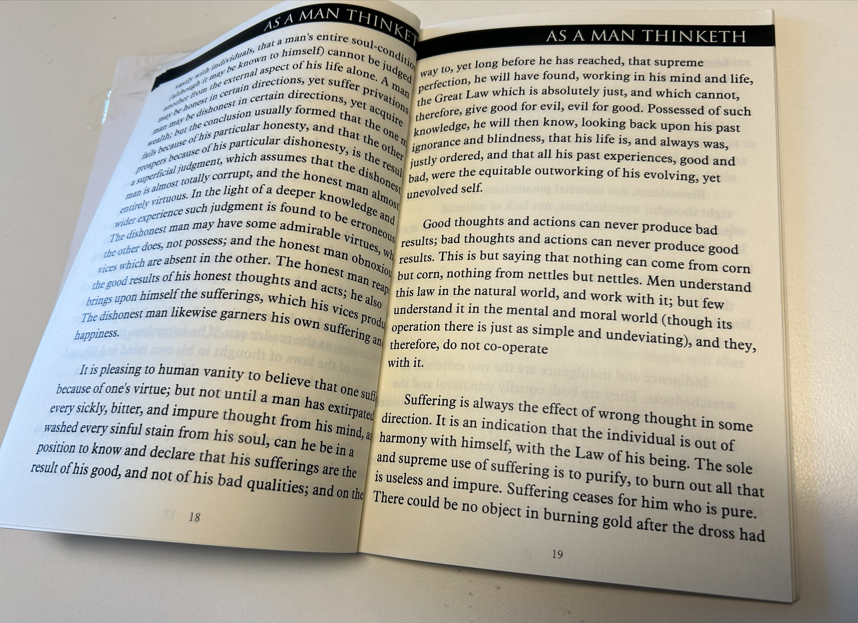
Australian book with terrible gutter loss and really bad typography
Unfortunately, many Australian companies that aren’t scammers suffer from the ‘poor design syndrome’. Authors who have low visual literacy often stumble into these companies, and as a result receive very poor design work. They aren’t scammed financially, but their books fail due to the company not being able to live up to the service quality they should be providing.
This is a difficult one because some authors might be great storytellers, great writers, and great book promoters. But they might not be skilled at distinguishing between a book that looks good and one that doesn’t. A simple test is to look at the covers a traditional publisher like Penguin or Allen & Unwin produce within your genre, and line the self-publishing company’s books alongside.
Then there’s the book typography – the internal design of the book – which is often a big shortcut scam companies use. While Green Hill designs our books in industry standard design software Adobe InDesign, scammers often being just crude Word processing.
Green Hill book design work is showcased here. It speaks for itself.
Featured Blog Posts:
The Cathartic Memoir – I’ve journeyed from contempt to enthusiasm
Why write and publish a memoir? Will anyone be interested?
If I was running a 45 minute training session for indie authors what would be on the curriculum?
Here an experienced indie author publisher shares 4 topics every aspiring self-publisher needs to know.
Self-publish your book by raising funds through crowdfunding
You can fully finance you project (and more) if you apply the necessary effort.
Is Goodreads good for authors?
Estimated reading...
What is typesetting?
Estimated reading...
Social media marketing for authors
Social media...
Have you got the book hierarchy blues?
Estimated reading...
The economics of selling your book
Estimated reading...
What 99.9% of authors don’t know.
Estimated reading...
Three tips for drafting your own work
Estimated reading...

Related Posts

The Clennett Report – 22 May 2026
Book Publishing News in Australia from Green Hill’s Kaitlan Sharpe
The Clennett Report – 15 May 2026
Book Publishing News in Australia from Green Hill’s Kaitlan Sharpe
The Clennett Report – 8 May 2026
Book Publishing News in Australia from Green Hill’s Kaitlan Sharpe
The Clennett Report – 1 May 2026
Book Publishing News in Australia from Green Hill’s Kaitlan Sharpe
The Clennett Report – 24 April 2026
Book Publishing News in Australia from Green Hill’s Kaitlan Sharpe
The Clennett Report – 17 April 2026
Book Publishing News in Australia from Green Hill’s Kaitlan Sharpe
Saturday 24 Oct 2026

Learn more
Our websites


Saturday 24 Oct 2026