No Results Found
The page you requested could not be found. Try refining your search, or use the navigation above to locate the post.


 Estimated reading time: 4 minutes
The page you requested could not be found. Try refining your search, or use the navigation above to locate the post.
The page you requested could not be found. Try refining your search, or use the navigation above to locate the post.
In just a quick 8,000 words, this little book will equip you with the knowledge you need to successfully publish your book.
The Little Book of Big Publishing tips goes into the essentials of self-publishing a book, outlining the business and financial side of publishing, legal issues, design, editing, sales and marketing. There's even a section on how to identify a vanity-publishing scam.


Estimated reading time: 5 minutes
Supporting Australian authors is an interesting topic of discussion. While there are a range of opinions on just where authors in Australia are at, the data does not lie. The 2022 National Survey of Australian Book Authors (November 2022 – Australia Council for the Arts, Copyright Agency and Macquarie University) shows why many authors are abandoning the traditional publishing model and why self-publishing is on the up.
The Introduction to 2022 National Survey of Australian Book Authors identifies the Australian book industry as one of the:
most important among our cultural industries both in the contribution it makes to the economy and its role as an essential element in Australia’s cultural life.
The report’s Conclusion states:
the benefits Australian book authors provide are not reflected in the marketplace, and as an instance of market failure they justify the support of government policy to ensure they will continue to be generated.
The conclusion might be simply put: “the taxpayer should pay for books to be published and support Australian authors”. The survey’s assertion of ‘market failure’ is presumably based on data describing the very low earnings of authors. This data reveals the average author earns just $4,100, the average poet just $600 in royalty payments per annum. This conclusion can be challenged on several grounds but I won’t be going into any depth on that right now, rather segue to my humble thoughts below.
To me, the survey affirms that the traditional publishing industry model is well and truly broken. And that doesn’t mean that ‘government policy’, presumably fiscal policy, is the answer. Are people old enough to remember the painful dismantling of the Federal Government’s tariff and subsidy regime for the Australian automotive industry in the 1980s and 1990s, and the sector’s eventual total collapse in the 2000s and 2010s?
Books and cars are a long way apart, but the principle is the same. Government policy and financial payments seldom reach the people most in need (the authors) and seldom effect needed change. Rather, money goes to propping up industry players – the traditional publishing companies, many of whom are doing quite well financially – instead of supporting Australian authors directly. And government support is often a bandage, doing little to fix the underlying structural issues.
While the publishing industry in Australia has long been in gradual decline (or at best flat-lining), self-publishing has now established itself as a viable option for many authors. True self-publishing is self-funded publishing.
Is self-publishing the solution? Quite possibly. But one thing I know is that right now, structural change is ongoing and gathering pace! Bricks-and-mortar bookshops are disappearing, some online booksellers are feeling the pinch and AI is threatening the viability of content creators. The good news is there is a new publishing model rising – its the continued democratisation of publishing. And that’s a good thing.
David Walters | Director, Green Hill
The page you requested could not be found. Try refining your search, or use the navigation above to locate the post.
The page you requested could not be found. Try refining your search, or use the navigation above to locate the post.
In just a quick 8,000 words, this little book will equip you with the knowledge you need to successfully publish your book.
The Little Book of Big Publishing tips goes into the essentials of self-publishing a book, outlining the business and financial side of publishing, legal issues, design, editing, sales and marketing. There's even a section on how to identify a vanity-publishing scam.

Estimated reading time: 6 minutes
Why write and publish a memoir? This Blog Post dedicated to Julien and others labouring to write their memoirs and asking themselves the question “will anyone be interested?”
What is a Misery Memoir? This is a derogatory term invented by the traditional publishing industry to denigrate the validity and efficacy of a memoir that has a narrative – telling a story – of an individual’s suffering or experience of injustice caused by the actions of others. In discussion with a traditional publishing colleague he remarked “the industry needs to purge itself from the Misery Memoir.” In contrast, my view on the so called Misery Memoir has radically changed from contempt, to acceptance, to enthusiasm. As a company that facilitates the publishing of memoirs, I’ve thought long and hard about where these books fit in the publishing landscape.
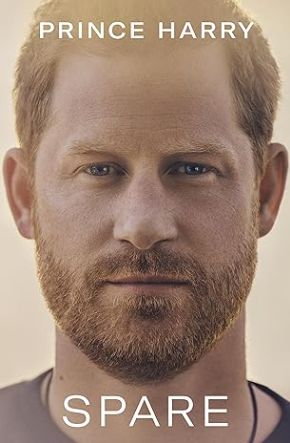 They can be enormously popular. Ironically Prince Harry’s traditionally published Spare, was a narrative of how he was wronged by the very people closest to him, the institution of the royal family, and the media. The book is the fastest selling non-fiction in world history, selling around 6 million copies to date (since its release in 2022). In the first day the book sold 1.43 million copies. Why? I read the book and found it distasteful and quite annoying. But I sort of enjoyed reading it, devouring its bulk in a couple of days. It was biased and negative but at the same time an enjoyable read.
My conversion to the validity of the Misery Memoir came through a fuller understanding of why reading these can actually be a feel-good. Sometimes it’s an insight into other people’s unreasonable behaviour and poor thought patterns, including bitterness, jealousy and resentment… ‘how can people think like that’. This can justify my dislike of the book’s writer, but most importantly it can be an exercise in empathy… ‘Harry’s experience is a little like mine’.
My fresh understanding was validated when I read Aristotle’s Poetics, in which he coined the term catharsis. When we complain about other people’s behaviour behind their backs it can be cathartic, especially when others in the conversation have a similar complaint. Don’t judge me! This is common to human experience and you know what I’m talking about. In one corporate setting – when I worked at a university – meetings sometimes strayed into vicious critiques of other people. At these all-in sessions people can leave strangely satisfied, often feeling much better because others feel the same way. Participants can feel a sense of relief and healing.
In no way am I endorsing this behaviour but I’m analysing the effect. Character assassinations are cowardly, however, can you see the effect on the human psyche? For the critics it can be positive. It can be therapeutic.
Listening to Blues music can make people feel better.
Aristotle commented on the positive effect on audiences watching a Greek tragedy – a theatre production that in a way parallels a Misery Memoir. The Greek tragedies evoked both fear and pity. For Aristotle this resulted in catharsis for the audience – a release or purging of bad emotions.
Alexandra Kostoulas at medium.com puts this very well:
In Aristotle’s Poetics, a lengthy and ancient treatise that draws out among other things the concept of the 5-act dramatic structure of plays, emotional catharsis comes to the audience after the audience experiences tragedy.
After watching a tragedy, when everybody dies in the end, as we cry, we feel cleansed. Think about the end of Romeo and Juliet. This kind of art lets us feel the feelings. As the theory goes, after a good cry, we feel better. We feel better because we have directed our own anxieties outward and, through sympathetic identification with the tragic protagonist,
Indie publishing (or self-publishing) is a great medium for authors to experience catharsis. We call that ‘publishing as therapy’. The finished work, if put together well, can also be therapeutic for readers.
I’m now working on a new, more positive name for the Misery Memoir. Maybe the Cathartic Memoir. Does anyone have any ideas?
David Walters | Founder | Green Hill
The page you requested could not be found. Try refining your search, or use the navigation above to locate the post.
The page you requested could not be found. Try refining your search, or use the navigation above to locate the post.
In just a quick 8,000 words, this little book will equip you with the knowledge you need to successfully publish your book.
The Little Book of Big Publishing tips goes into the essentials of self-publishing a book, outlining the business and financial side of publishing, legal issues, design, editing, sales and marketing. There's even a section on how to identify a vanity-publishing scam.