No Results Found
The page you requested could not be found. Try refining your search, or use the navigation above to locate the post.


IMPORTANT NOTE: THE BOOKS USED IN CASE STUDIES HERE ARE NOT GREEN HILL PRODUCTS
 Estimated reading time: 6 minutes
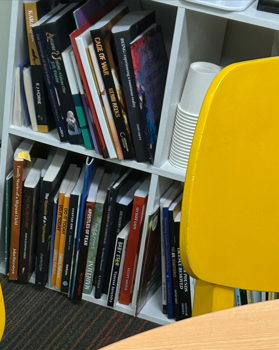
The secret Green Hill Publishing Hall of Shame collection of very bad books
Many self publishers or indie authors have genuine talent. But as a self-publishing company whose mission is to help indie authors publish in a professional manner, we regularly get some grotesque examples of things that have gone terribly wrong. Some of these books have been produced by UK, North American or Australian fee for service companies (similar to Green Hill Publishing but often charging outrageous fees to their unsuspecting victims). Others have been wholly put together by the author themselves.
Ironically many of these authors come to us with a request for us to help market the book with the objective of generating sales revenue. Our advice is fairly standard:
Often the result of this feedback is that the authors are offended, sometimes angry. We are never able to help market these books because they are not appealing to readers and retailers can smell a poor book a mile off. To be able to market a book a lot of “ducks need to be in a row” – several elements need to be just right. Some of these elements are visible. like print quality, book cover design and typography. Others are invisible like the strength of the book concept/story, the quality of writing/editing, metadata and online findability.
Our studio/office has a special secret section called the Hall of Shame – a collection of the worst possible books that authors have asked us to market.
In a few instances where the authors ask us to fix their books, unfortunately the scenario has been along these lines:
‘That’s is a a very good costing. But the US company I used charged two and a half times as much and I simply don’t have a lot of money left. Can you do it for free?’
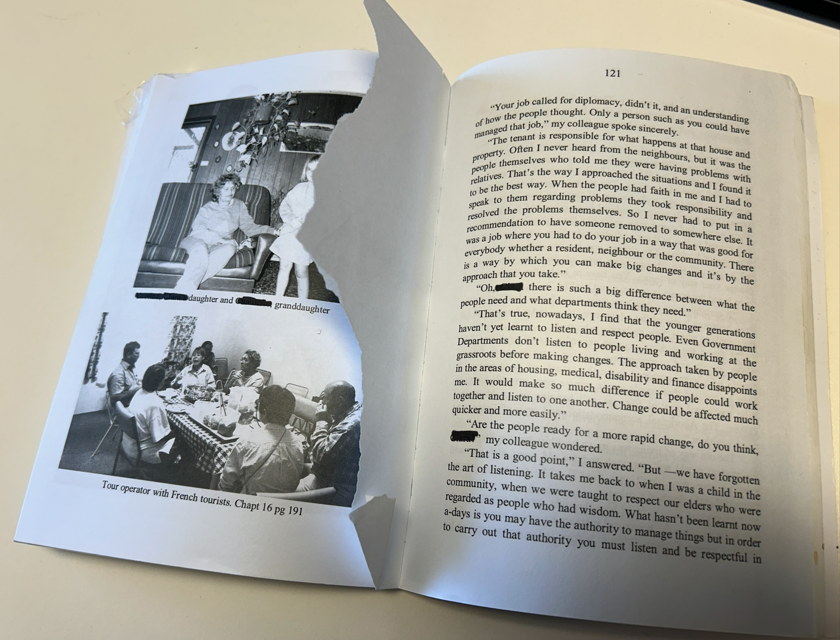
Oops… the printer has accidentally inserted some blank pages throughout the book and the poor author has tried to tear them out.
There are a few scenarios when it comes to self-publishers doing poorly in the area of getting their books printed. Book printing is a specialised craft and many printers simply don’t have the equipment to print in quality at a good price. Often self-publishers will walk into a printer that they have noticed passing on their morning commute. If the printer doesn’t have the equipment they might secretly pass it to another company. Or they might do it themself. They might do it themselves and it might be poor.
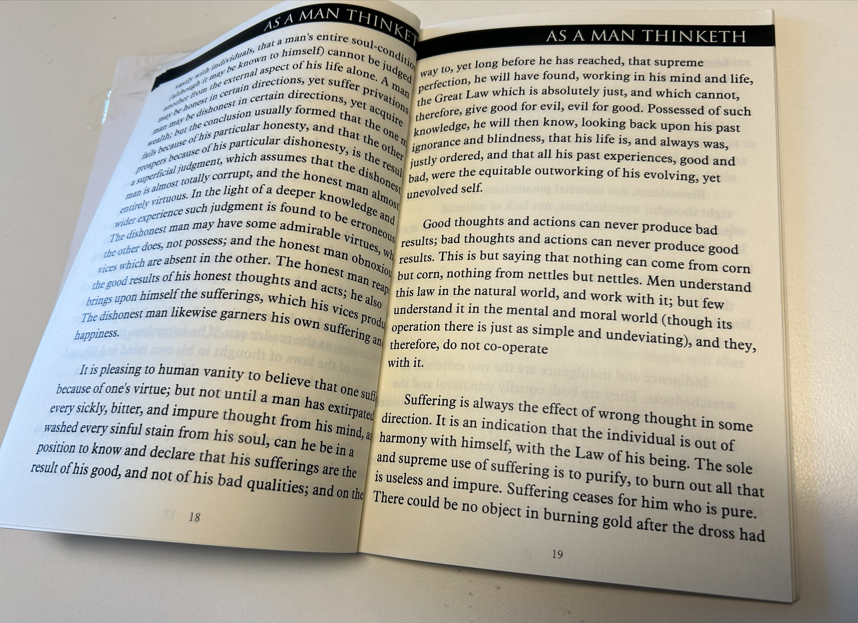
Book with gutter loss.
We’ve seen this so many times and it makes the book look silly. Not only that, its impossible to read. Gutter loss is where the interior typesetting does not allow enough space in the inside margins. When the book is bound some of the text is obscured. More about gutter loss: Printmybookaustralia.com.au
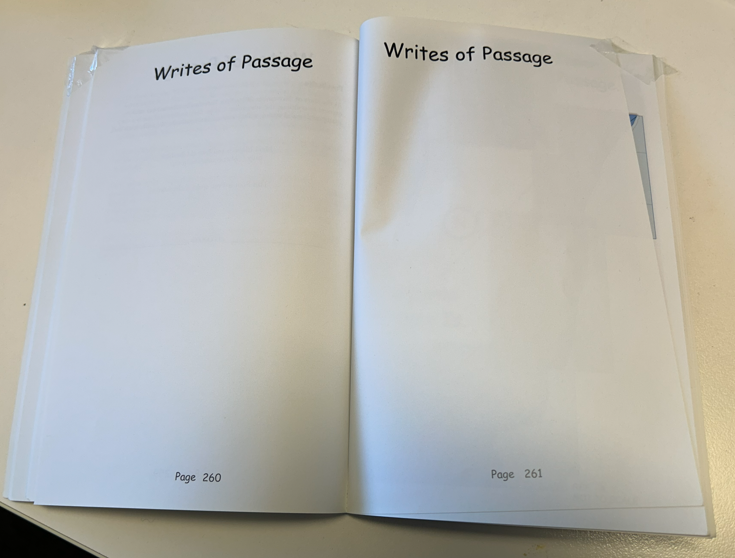
Weird blank pages and odd setup.
We’ve seen books with very unusual structure – the order of the various sections – often reinvented by the author themselves. The problem with this approach is that the reader can be easily confused. Book publishing has benefited from the structure of books being codified or defined over centuries. Everything has its place and this standardisation helps readers navigate through a book with familiar ease. One author presented their book with the Author Biography at the front of the book reasoning that ‘people won’t be that interested in the book but they should be interested in me.’
We recommend any author with ‘new innovative’ page ideas should first have a look at the New Hart’s Rules – The Oxford Style Guide. For over a hundred years, Hart’s Rules has been the authority on formatting of publications, but we see authors doing their very first book somehow knowing better. The result is invariably a weird and unprofessional book.
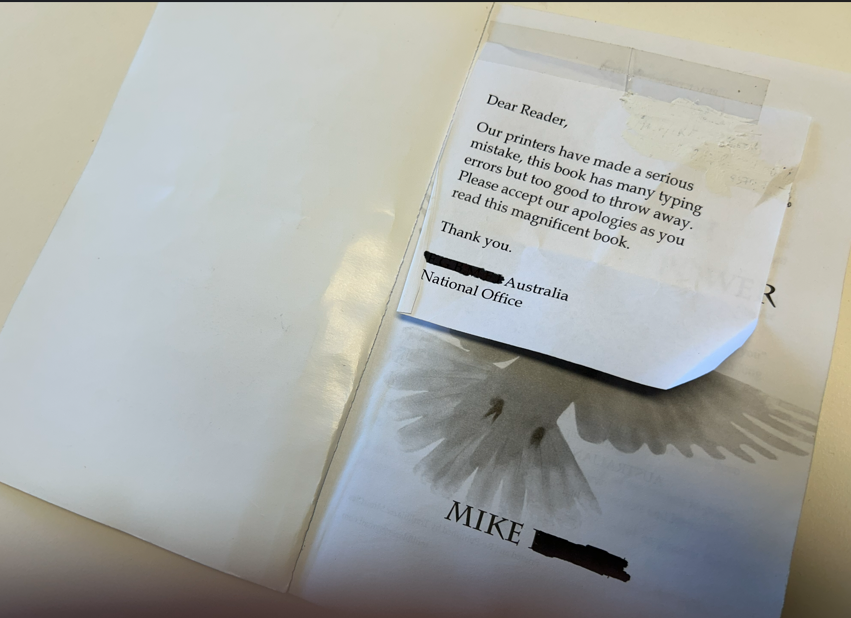
Publisher gave wrong manuscript to the printer
We’ve got many examples of botched books that have been designed and printed using the wrong manuscript or artwork. Usually the affected author is indignant that the book contained the old manuscript (which is normally littered with errors). We ask ‘how did the book producer get the old manuscript?’ and the answer invariably is ‘I sent it to them’. What normally happens is a disorganised author will send numerous versions of the manuscript with the same file name. Should a print error come as a surprise? In this instance the publisher blamed the printer… “our printer has made a terrible mistake”.
In the instance at left the author sent numerous different PDF files (all supposedly ‘finished art’ exported from Word) to the printer and the printer should have used the 5th one sent not the 6th one. In total the printer was sent over 50 emails over a 7 month period. The author remarked to us “I sent so many emails, and they still got it wrong”. Obviously the author took no responsibility for the chaos they had created. And it seems they didn’t even examine the proof copy provided before the big print run. The result – an embarrassing book filled with several hundred terrible spelling and grammatical mistakes.
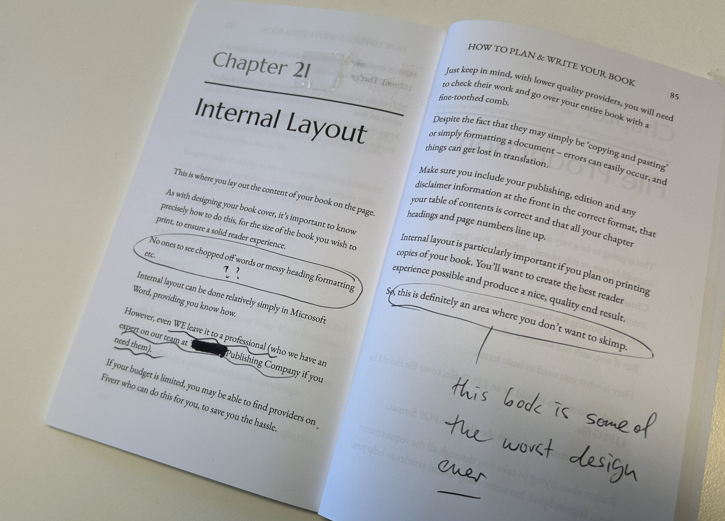
A self-publishing company’s own book where they ignore their own poorly written advice.
Aspiring authors who decide they need help often seek a fee for service self-publishing company. The problem is the internet is littered with scammers, mediocrity, underpowered start-ups, small scale 1-2 person companies who don’t have specialists. They might be graphic designers posing as publishers or aggressive marketers who are based in North America and use designers in Bangladesh and call centres in the Philipines.
Here is a book put out by a somewhat genuine Australian start-up who quite obviously have little expertise. Their own book on how to self-publish is one of the most poorly written and designed books we’ve ever seen. An author who was a victim of the company, gave this to us incredulous that they promised so much and delivered so little. The language is poor and mistakes overt – but the very ‘green’ inexperienced author fell for it not being able to see the shortcomings.
The page you requested could not be found. Try refining your search, or use the navigation above to locate the post.
The page you requested could not be found. Try refining your search, or use the navigation above to locate the post.

Estimated reading time: 6 minutes
Are we writing to please booksellers and libraries, bloggers, or readers?
Which of these audiences is going to have the most impact to the sales of your book?
These are valid questions, but the answer may not be quite so simple. Naturally, our first thought would be that the reader is the most important, but how do we reach them? How do we ensure that their awareness is drawn to the message we want to convey?
It has undoubtedly taken a huge amount of work to get your book to this stage. Your time and energy have gone into transforming an idea or dream into physical form. Do you now have the energy, knowledge, and resources to bring it to the attention of the rest of the world on your own?
This is where forming a network comes into play. Just like it took a team to transform your book into that physical form, having a system of connections available to increase the visibility and reputation of your creation is vital. Along the lines of the African proverb ‘It takes a village to raise a child’, it takes a community of resources and providers to unshroud your book-baby and reach your readers.
These audiences are extremely important because they could potentially purchase multiple copies of your book which is great for your reach and, in a reduced capacity, your pocket.
Who doesn’t want to see their book on the shelves of a bookstore or library? If you can see it there, so can thousands of potential readers. Establish connections with bookstores before your book is ready for market then discuss options with them for selling your book there on a consignment basis. This could be highly beneficial to both you and the bookstore. You get the exposure, and they don’t have to commit to purchasing stock that may not sell.
As a self-published author, you are responsible for either having stock on hand to sell directly to the bookstore or library or having online print on demand (POD) and distribution options such as Amazon KDP and IngramSpark set up for them to order from. While you receive less in royalties when your book is purchased from a POD platform, you won’t have boxes all around your house, and purchasing will be easier for the bookstore or library.
Again, these audiences can have a huge impact on increasing your reach, even if you don’t plan to have a social media presence of your own. If a blogger mentions or reviews your book, the potential is there for many more readers to hear about it and possibly purchase it.
Authors can send copies of their book to bloggers and bookstagrammers to ask for reviews. It could be considered bad manners to approach directly with no previous contact though. If you are active on social media, follow and engage with the influencers who may be interested in your work, then perhaps ask them if they would be willing to provide a review if you send them a copy.
The description ‘reader’ can apply to members of the above groups, as well as every other individual who pick up or view your book.
Imagine someone walking into a bookstore or library, picking up your book because of the beautifully designed cover, and being told what a wonderful read it is by a staff member!
While a library patron gets to read the book for free, they may love it so much that they buy a copy for themselves or as a gift for someone else. Also, if a library is being asked for a particular title, they are more likely to stock it or increase their stocks of it. Libraries can assist authors with Public Lending Rights to ensure if the book is borrowed, the author can still make a royalty per borrow. This royalty is marginal but beneficial if the book is well requested.
Whatever your thoughts are on social media, it can be a powerful tool to increase awareness of your book and you, if that is what you desire. Bloggers and bookstagrammers can have a great influence on the breadth of audience for your work. Take a look at our blog on Social Media Marketing for Authors for more information.
Your potential readers are everywhere; in brick-and-mortar establishments and on the internet. They may even walk past you in the shopping centre.
They are all important, whether as a doorway to actual purchasers, advocates for your work, or as the people who will read and connect with your message.
The page you requested could not be found. Try refining your search, or use the navigation above to locate the post.
The page you requested could not be found. Try refining your search, or use the navigation above to locate the post.

Estimated reading time: 4 minutes
Most us us know this because we were all children once (and our parents read to us). The following should be a great motivation for all aspiring Children’s book authors!
ukStudies on early childhood education consistently reveal that children who have access to age-appropriate books and regular reading time perform better across all areas of learning.
Interestingly, the pandemic reshaped how families approach reading. With schools closed and parents spending more time at home, many discovered the value of reading together — and the data proves it.
According to Publisher’s Weekly, two of the top-selling books of the year were Big Preschool Workbook (790,000 copies sold) and My First Learn-to-Write Workbook (703,000 copies). These figures highlight how many families embraced at-home learning and literacy-focused activities.
Just have a look at how this toddler is fully engaged with a childrens board book, She is focussed and she is learning: printmybookaustralia.com.au
Introducing books early — even before a child can read — builds crucial language and literacy skills. Parents who make reading a regular part of daily life tend to raise children who not only perform better academically but also develop a genuine love of learning.
Reading aloud also promotes curiosity. A single interesting fact or story can spark questions that lead to deeper exploration — an important part of developing problem-solving and critical thinking skills.
Hearing stories read aloud helps children:
Strengthen vocabulary and word recognition
Improve comprehension skills
Develop better listening and focus
Connect spoken language to written words
Long-term research on reading to children shows that early exposure to books builds confidence and fosters lifelong reading habits. Kids who are read to regularly are more likely to achieve higher literacy levels and meet educational goals throughout school.
These recent numbers illustrate how powerful shared reading can be:
89% of kids aged 6–17 say their favorite books are those they choose themselves.
72% of children aged 6–11 think reading aloud with a parent is fun.
31% of kids aged 6–11 who are read to regularly say it made them love reading.
82% of kids are encouraged by their parents to read for fun.
67% of children say their teachers also motivate them to read for enjoyment.
4. Final Thoughts: Building a Lifelong Love of Reading
Reading to your child isn’t just about improving literacy — it’s about connection, curiosity, and creating a love for stories that lasts a lifetime. Whether it’s a bedtime story, a picture book, or a chapter read aloud, every page helps your child grow into a confident, capable learner.
The page you requested could not be found. Try refining your search, or use the navigation above to locate the post.
The page you requested could not be found. Try refining your search, or use the navigation above to locate the post.