No Results Found
The page you requested could not be found. Try refining your search, or use the navigation above to locate the post.


 Estimated reading time: 5 minutes

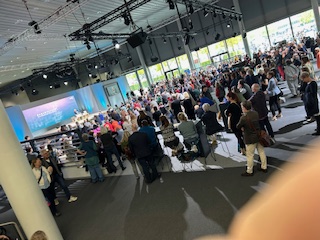
Hall 1 – just one of a giant campus of exhibition halls of 400,000 metres of floorspace
Green Hill is again at the Frankfurt Book Fair in Germany or ‘Frankfurt Busch Messe’.
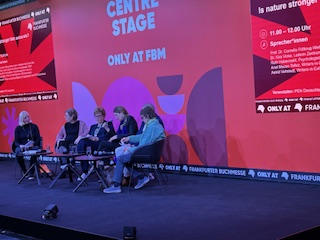
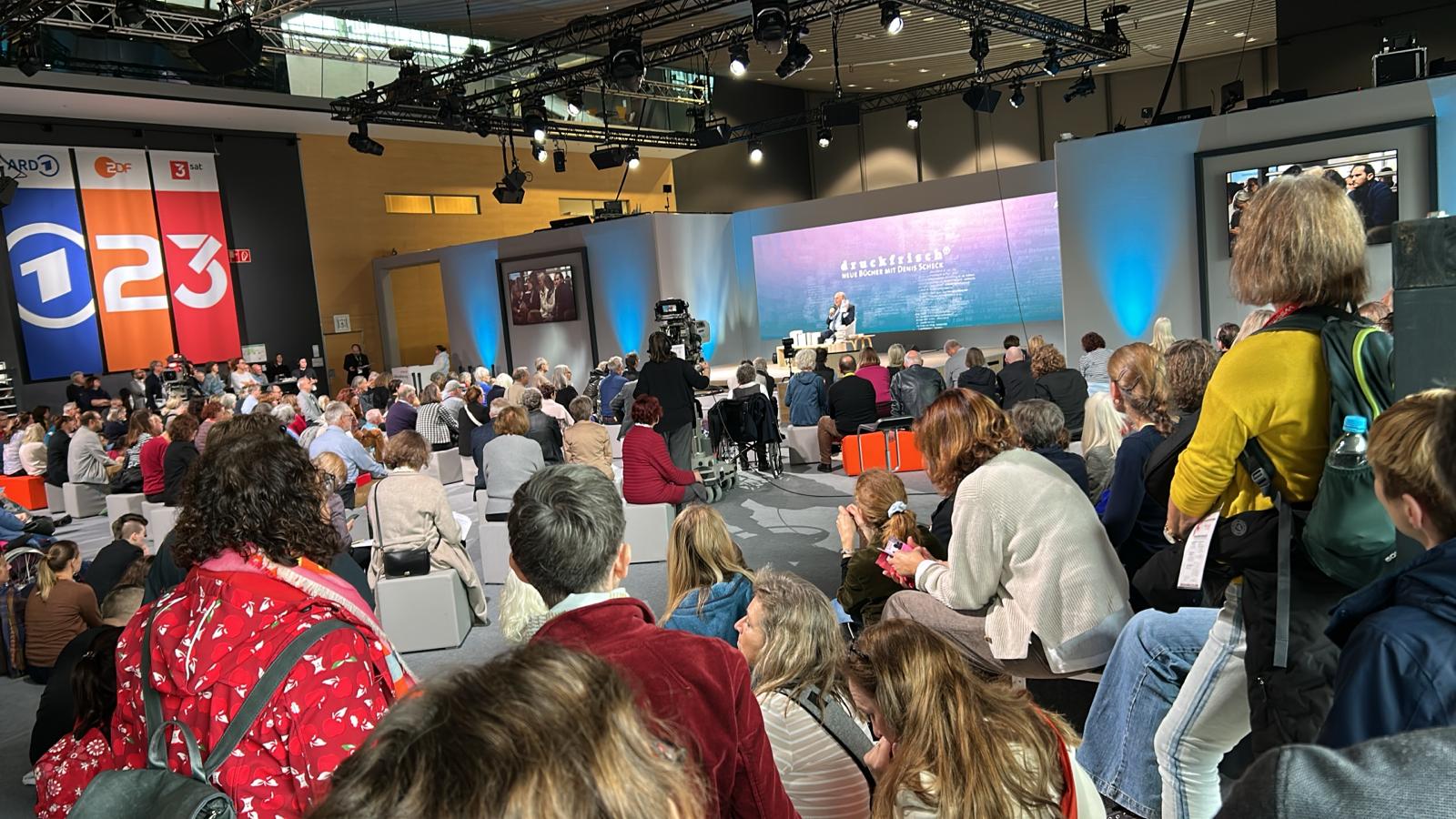
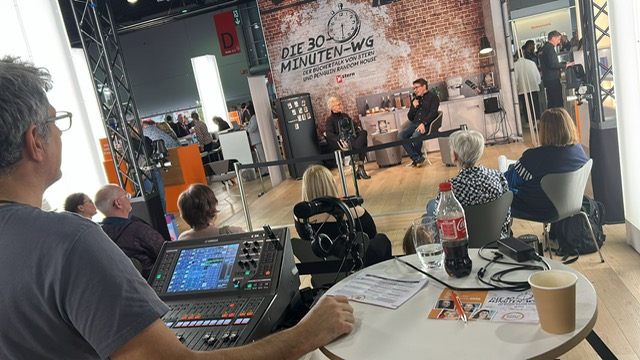
I’m here scouting the industry – it’s always rewarding adding to Green Hill’s expertise and capability. As always indie publishing or self-publishing isn’t a feature of the Fair. Instead most of the world’s traditional publishers are here: over 4.000 companies/exhibitors from 92 countries – yes, that’s not a typo. Over the five days there will be almost 250,000 visitors – yes again that’s not a typo. Of the 250,000 there are about 125,000 industry professionals (like me).
We are constantly adding to our expertise and the Messe is a great way of doing that. Our print broking division (Fox Merit) has had discussions with many book printers exhibiting here (mainly from China, Korea and Hong Kong) as we endeavour to provide the world’s best print options at value. An important part of the industry is book production technologies. Green Hill already has good capability in this area and it sets us apart from solo graphic designers trying to master book production at a competitive cost to indie authors.
The Messe has returned to its former strength after the Covid pandemic. Everyone is back. All the new tools and technologies are here along with all the traditional publishing giants of the publishing industry. Of course the big feature of the Messe is the trading of foreign language publishing rights. It’s a feeding frenzy – a market place where publishing rights are bought and sold with gusto.
DAVID WALTERS ~ Business Development Manager
Presentation




The page you requested could not be found. Try refining your search, or use the navigation above to locate the post.
The page you requested could not be found. Try refining your search, or use the navigation above to locate the post.


‘I want my book design to be unique. Something no one has ever seen before. This will sell my book.’
This is a common statement we hear from authors—especially those releasing their first book. You’ve poured your heart into your manuscript, and you want the outside to reflect how special it is. You want it to stand out, to be different and to “wow” people. But the truth is that a truly unique cover isn’t always what sells a book, in fact it can have an opposite effect. Most bestselling books within a genre follow a visual trend—and there’s a good reason why.
Readers are drawn to what they recognise. They make fast decisions based on visual cues. When they scan a bookstore shelf or scroll through online listings, they’re looking for signals:
And they rely on the cover to answer that question for them.
If your cover doesn’t speak the language of your genre, it risks being overlooked completely.
Most bestselling books follow visual trends within their genre. Not because they lack creativity, but because they know how to play to the expectations of their target audience.
Let’s unpack why cover clichés aren’t something to fear and how embracing them can actually be the smartest move you make for your book.
Estimated reading time: 6 minutes
Take a look at Emily Henry. When she burst onto the scene, her covers were bold, colourful, and “romantic” in a fresh, modern way: flat, vibrant colour palettes, illustrated figures, playful, clean design. They spoke to the genre.
Suddenly, the shelves were packed with similar designs, and that wasn’t by accident. Her covers worked and they connected with readers. They signalled exactly what kind of story was inside: light-hearted, heartfelt, contemporary romance with emotional depth. Readers responded in droves—and other publishers took note. That’s how book design trends start.
Just like in the fashion world, book cover trends emerge when a particular look resonates. When it feels timely and captures the current cultural mood. A few titles catch fire, the aesthetic spreads, and soon it becomes the visual shorthand for that genre or tone.
It’s not about copying—it’s about communicating. Covers that follow genre trends aren’t lazy or unoriginal; they’re strategic. These cover designers are using design language that readers already understand.
Think of it this way: if your book is a romantic comedy, but your cover looks like a thriller, you’re sending mixed signals. A reader might skip right past it—not because they won’t like your story, but because your cover told them it wasn’t for them.
Trends work because they help your ideal reader instantly identify that your book is the kind of book they’re looking for. So instead of asking ‘How do I make my cover unlike anything else?’ try asking, ‘How do I make sure my cover speaks clearly to my reader?’
That’s the real key.
The word “cliché” often gets a bad rap, but in the world of book design, clichés exist for a reason.
These familiar visual elements don’t just appear out of thin air. They became common because they consistently help connect the right readers with the right books. In a highly saturated market where readers are bombarded with options, clarity and instant recognition are powerful tools.
Here’s why using well-worn design elements can actually drive more interest (and more sales) for your book:
Studies show that humans process visual information in less than half a second. That’s all the time you have to make a first impression. When someone scrolls through an online bookstore or walks past a shelf, your cover needs to immediately communicate this is for you. And it needs to do so without the reader even thinking about it.
Familiar genre elements—like a silhouetted figure on a foggy street for a crime thriller, or a pastel-illustrated couple on a romantic beach for a romance—act like a visual shortcut. They let the reader know “this story is the kind you love”. No guessing, no confusion, just instant recognition and connection.
That moment of clarity makes all the difference between a scroll-past and a click-through.
We’re wired to respond emotionally to what we see. Colour theory, typography, layout, and imagery all evoke specific feelings—and savvy cover design leans into that.
Think about it:
When your cover uses visual elements that align with the genre and emotional tone of your story, you’re not just creating something attractive, you’re priming the reader’s expectations before they’ve read a single word.
This kind of alignment between genre, emotion, and design builds trust. And trust leads to purchases and loyal readers.
Some visual elements have become so closely tied to their genres that they’re instantly recognisable—and incredibly effective. These aren’t outdated or lazy design choices. They’re genre anchors—reliable cues that tell readers in a split second what kind of story they’re about to step into.
These aren’t tired clichés—they’re trusted markers, and in a sea of titles competing for attention, that kind of instant clarity is a tool. It helps readers spot the kind of book they already love, which means your book lands in the hands of someone who’s genuinely excited to read it. That’s the overall goal.
Originality isn’t about breaking the mould. It’s about adding a fresh twist within the mould. You can (and should!) aim to create a cover that feels distinct, but if your design strays too far from what readers expect, it runs the risk of being confusing or invisible.
For fiction, your cover’s job is clear: communicate genre and tone at a glance. If a potential reader needs to stop and figure out what your cover is trying to say, they’re likely to move on. People don’t browse bookstores with the intent of solving puzzles—they’re scanning for books that feel familiar, exciting, and right for them.
Originality, in this context, is about detail, not structure. Maybe it’s a unique colour palette, an unusual perspective, or a symbolic object that adds intrigue. But the overall design still needs to stay rooted in genre conventions to effectively do its job
Non-fiction is a different ball game. Readers often expect to be surprised, challenged, or intrigued. This means there’s more room for visual metaphor and unexpected juxtapositions.
These covers don’t need to scream a specific emotion—they need to spark curiosity. In non-fiction, the cover can function almost like a hook or question: ‘What is this about? Why does this image feel strange? I need to know more.’ That kind of intrigue works because the reader comes in prepared to be educated or provoked.
Being original doesn’t mean being obscure. It means being smart and adding just enough personality to a proven formula. When you respect the language of your genre while finding a subtle way to express your unique voice, that’s where great cover design lives.
Let’s clear something up: all publishers use stock photography.
From Big Five publishing houses to indie imprints and everything in between, stock imagery is an industry-standard tool in the cover designer’s toolkit. If you look at the copyright page or back cover of some of the books on your shelves, chances are it will say stock photography has been used.
It’s a smart, efficient, and professional way to create compelling, high-quality book covers.
Stock images aren’t used because of laziness or lack of originality. They’re used because they provide access to a vast, high-resolution library of professionally lit, styled, and edited visuals. These images become starting points that allow designers to focus on crafting something polished and impactful without the limitations of budget-heavy photo shoots.
Cover designers use stock to streamline the process and focus on composition, storytelling, and style. When you work with a professional designer, they’re not just pasting a stock image onto your cover and calling it done. They’re manipulating it, blending multiple images, adjusting colour palettes, cropping, layering textures, adding lighting effects, typography, overlays, and illustration work.
And what is the end product? A cover that looks custom-built and is aligned with your genre, your tone, and your target reader.
In many cases, the original source image is unrecognisable by the time the final cover is complete. That’s the magic of thoughtful design: it turns something ordinary into something emotionally resonant and uniquely yours.
It’s a fair concern, but the likelihood of another book using the exact same image, in the exact same way, is low. What truly sets your cover apart isn’t just the photo, it’s how it’s used. The typography, layout, colour grading, and overall aesthetic come together to make your version distinct.
If you’re working with a skilled designer, they’ll most likely avoid overused stock or generic imagery that risks blending too far into the crowd.
Stock photography isn’t a compromise. It allows designers to deliver creative, beautiful, and market-ready covers at a fraction of the cost and time required for custom photoshoots or illustrations.
So, if you’re worried your cover won’t be “original enough” because it uses stock—don’t be.
In the end, great book cover design isn’t about reinventing the wheel—it’s about understanding the expectations of your readers and using familiar design elements to your advantage.
By embracing genre conventions and leaning into trends, you ensure your cover resonates with your audience and stands out in a crowded market.
Originality isn’t about being obscure; it’s about finding the perfect balance between clarity and creativity. When you respect the visual language of your genre while adding your unique touch, you’ll create a cover that not only grabs attention but also draws readers in, eager to discover the story inside.
The page you requested could not be found. Try refining your search, or use the navigation above to locate the post.
The page you requested could not be found. Try refining your search, or use the navigation above to locate the post.

Estimated reading time: 12 minutes
Self-publishing means more than just uploading a manuscript to KDP or paying someone to publish your book. In a world domineered by traditional publishers who cherry-pick which manuscripts get to be published, self-publishing gives authors’ back their freedom and autonomy. This is because self-publishing gives authors—not publishers—the ability to decide that their stories are worthy of being heard.
Authors who self-publish their books feel the empowerment and fulfilment that self-publishing provides. When you hold your beautifully, professionally designed and printed book in your hands, and you know that you alone have ownership over it, it can be extremely rewarding. The satisfaction and pride you feel when you realise that you have made something that is out on bookshelves and in the hands of readers is unparalleled.
With the advancements of technology and the internet, self-publishing has become so much more accessible and viable for authors who want to publish their book outside of traditional means. It also means that authors can take more control of their publishing journey. There are many ways that you can self-publish a book, including completely independently through services like Kindle Direct Publishing, or assisted through a self-publisher or a hybrid publisher.
Choosing to publish your book without the assistance of a self-publisher / hybrid publisher can be quite difficult, but is possible. There are a few things you need to be aware of when considering this option:
Everyone would like to think that their book is perfect, but it’s rarely the case. Readers will be able to tell pretty quickly whether a boo has been edited or not. This means that it’s important to consider having someone—if not a professional editor, then a at least a well-read and literate friend/family member—look over your manuscript and correct any errors that are present. There are different kinds of editing, which we go over in our blog post about editing.
Everyone knows the saying “Don’t judge a book by its cover,” we’ve even said it a few times in other blog posts, and this is because it’s not true. The first thing that your potential readers will see when they look at your book is the cover. Your book cover is your front-line marketing salesman—its main purpose is to persuade readers to first pick the book up and then to keep it. Having a professional designer create your book cover is an excellent way to ensure that you’re presenting your book well to your potential readers.
The design of a book’s interior is just as important as the book cover, only for different reasons. It focuses on the look of a books interior and how the design interacts with the text, but also focuses on readability, searchability, and accessibility. This means that if your book is typeset correctly, the readers will have an enjoyable reading experience and won’t be distracted by errors in typesetting that draw their eye. If you’re unsure if you can do this properly, it’s always best to hire a professional.
While there are some exceptions (read our blog post on ISBNs), every book in the market is required to have an ISBN. ISBNs are International Standard Book Numbers that are required by distributors and retailers for sales tracking and cataloguing purposes. Because ISBNs are unique to their assigned book, while titles and covers can be very similar to each other, ISBNs are instrumental to your book’s online searchability. You must purchase an ISBN for your book. If you live and publish in Australia, Thorpe Bowker is the ISBN provider you need.
Most if not all self-publishers and hybrid publishers have connections to printers. If you publish your book completely independently, however, you’ll have to approach printers yourself to discuss printing. This can be daunting and confusing as there are many different options out there regarding printers, book formats, paper types, and more.
If you publish your book through services like KDP, you will automatically be set up on Amazon and can then take it further by approaching other retailers to sell your book. Some online retailers do have specific requirements regarding the formatting and distribution of their books, so make sure to check their guidelines before you publish on them. Bookstore distribution can be a little difficult for self-published authors. This is because bookstores are wary of the quality and sales-value of self-published books as some authors cut corners and do not properly produce their books.
Self-published authors have to work hard and continuously to get their books into the minds of readers, but there are certainly strategies that can help. For help on how to do this, read our blog post on marketing for self-published authors.
If you decide to publish your book through a self-publisher / hybrid publisher, they will usually assist you with all aspects of your publishing journey. This is not to say that they will force you to do something you don’t want to, however. You, the author, are still the primary authority on all decisions made during the publishing process of your book.
When you choose to go with a self-publisher or hybrid publisher, you can get assistance you with the following:
Whether they do this in-house or out-source editing to partnered companies, they will help you to get your book professionally edited.
These companies often have their own design studios or out-source to freelance designers. It’s good to look at their past covers to determine whether you’re happy with the quality of work they can produce.
As I said earlier, printers and publishing companies deal with each other often and usually have connections with one another. When choosing to go with a publisher, they will advise you on format, paper, appropriate printers, and more, taking the stress out of this step.
Not all self-publishing companies do this, but reputable ones provide their authors with an ISBN and enable their book for distribution with online retailers. Some also have contacts or a good reputation with bookstore distributors and retailers and can help you get your book into places like that, too.
Some companies offer marketing services, some don’t. It’s best to do your research when deciding on which company to go with. Green Hill offers marketing services on an hourly basis to our authors.
In the same vein as maintaining control, self-publishing also allows authors to exert control over the creative aspects of their publishing journey, both the book itself and the author’s “author persona”.
Only extremely established authors in the traditional publishing sphere have any kind of say over their book cover or typesetting design. On the other hand, self-published authors maintain control over the design of their book—both the cover and the typesetting.
This can happen in one of two ways:
Many traditionally published authors are forced to have their social media accounts filtered by a marketing team. Meanwhile, as a self-published author, you have complete control over your author persona and how you present yourself to readers. More on this point later in point 4.
Having your book published through traditional means could anywhere from 12 months and three years. This doesn’t even account for the time it takes to find and be accepted by a literary agent or the time it takes for a publisher to accept your manuscript for publishing. On the contrary, self-publishers and hybrid publishers are much quicker plus you don’t have to worry about finding a literary agent. If things go smoothly, you could be holding your book in 6-8 weeks—this is the timeline you’ll get with Green Hill Publishing. That is an undeniably more appealing timeline, right?
A short timeline like this can be especially important for those with ill loved ones, or businesses with strict deadlines that need to be met. It also means that you won’t have to wait a year or more to see your idea be fully realised and achieve the dream of being a published author.
Your timeline with self-publishing can be pushed out if you get editing, ghost writing, illustration, or other extra production services. However, if your self-publisher or hybrid publisher suggests these things, it’s usually for a reason. It’s up to you whether you decide to take it on board or not.
To be in control of your author persona means that you are in charge of your social media, your book events, your launches, your website—everything. In doing this, you have the freedom to interact with your readers in your own way. You can interact with what people are posting about you as an author and your book, allowing you to answer their questions, pose your own, receive feedback, and interact with their creativity (e.g. fanart and fanfiction).
Self-published authors also have control over their own marketing. This includes promotional social media marketing, book launches and events, and author websites. When you have control over these aspects of your author persona, you can write your own blog posts, host your own livestreams and webinars, create videos and graphics, and use any number of other marketing strategies to ger your readers to interact with you and each other. This all means that you can present your author persona how you want—choosing your own aesthetic and strategies without the influence of a marketing team. This lets you show your readers the real you.
Doing all of this fosters a closer relationship between author and audience, building a community of loyal fans and helping you to appreciate your readers more.
Typically, traditionally published authors only see a small percentage of their book’s profits. This can be around 10-15%. On the other hand, self-published authors receive a much higher percentage. If you put time into your publishing project—from the first spark of inspiration, to having a professionally edited and designed book, to organising printing, and finally to marketing—you as a self-published author could see 70% or more of your book’s profits. This is a much higher percentage and more fairly reflects the effort and work that you, the author, have put into your book.
For many authors, this means that their writing is funded and their career as an author is viable financially. While financial success is not guaranteed for authors—self-published and traditionally published alike—self-published authors not only receive more of their sales profits, they can better control their income and what they invest in, like publicists, agents, and their next publishing project.
The page you requested could not be found. Try refining your search, or use the navigation above to locate the post.
The page you requested could not be found. Try refining your search, or use the navigation above to locate the post.