Why write and publish a memoir? Will anyone be interested?

Biggest DIY indie publishing mistakes.
IMPORTANT NOTE: THE BOOKS USED IN CASE STUDIES HERE ARE NOT GREEN HILL PRODUCTS
 Estimated reading time: 6 minutes
The Hall of Shame
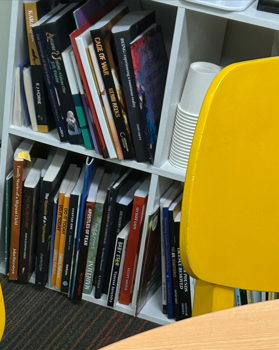
The secret Green Hill Publishing Hall of Shame collection of very bad books
Many self publishers or indie authors have genuine talent. But as a self-publishing company whose mission is to help indie authors publish in a professional manner, we regularly get some grotesque examples of things that have gone terribly wrong. Some of these books have been produced by UK, North American or Australian fee for service companies (similar to Green Hill Publishing but often charging outrageous fees to their unsuspecting victims). Others have been wholly put together by the author themselves.
Ironically many of these authors come to us with a request for us to help market the book with the objective of generating sales revenue. Our advice is fairly standard:
-
- the book will not sell to potential readers or not be considered by retailers
- the cover design is poor (often terrible)
- the typesetting is amateurish
- the print is sub-standard or faulty and/or the price of print is far too high
Often the result of this feedback is that the authors are offended, sometimes angry. We are never able to help market these books because they are not appealing to readers and retailers can smell a poor book a mile off. To be able to market a book a lot of “ducks need to be in a row” – several elements need to be just right. Some of these elements are visible. like print quality, book cover design and typography. Others are invisible like the strength of the book concept/story, the quality of writing/editing, metadata and online findability.
Our studio/office has a special secret section called the Hall of Shame – a collection of the worst possible books that authors have asked us to market.
In a few instances where the authors ask us to fix their books, unfortunately the scenario has been along these lines:
‘That’s is a a very good costing. But the US company I used charged two and a half times as much and I simply don’t have a lot of money left. Can you do it for free?’
1. Print botches
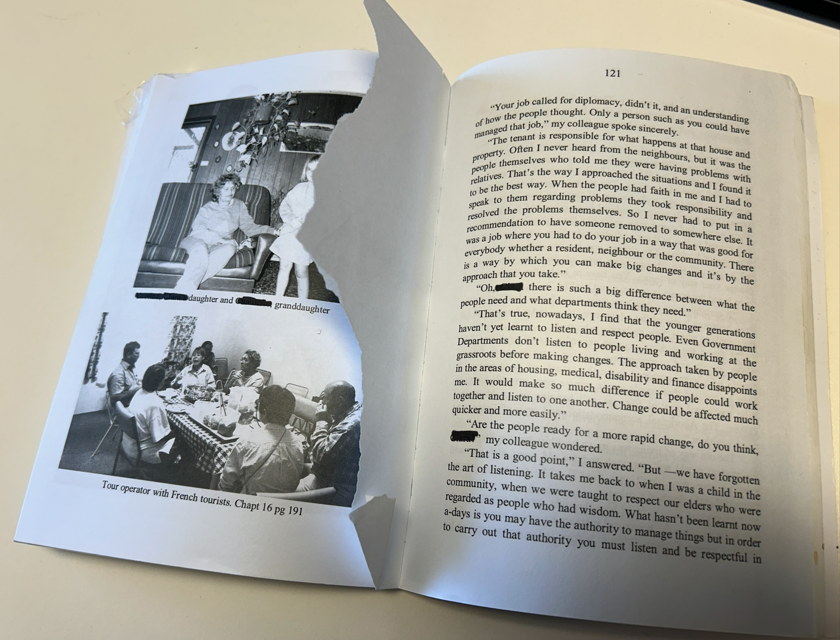
Oops… the printer has accidentally inserted some blank pages throughout the book and the poor author has tried to tear them out.
There are a few scenarios when it comes to self-publishers doing poorly in the area of getting their books printed. Book printing is a specialised craft and many printers simply don’t have the equipment to print in quality at a good price. Often self-publishers will walk into a printer that they have noticed passing on their morning commute. If the printer doesn’t have the equipment they might secretly pass it to another company. Or they might do it themself. They might do it themselves and it might be poor.
2. Gutter loss
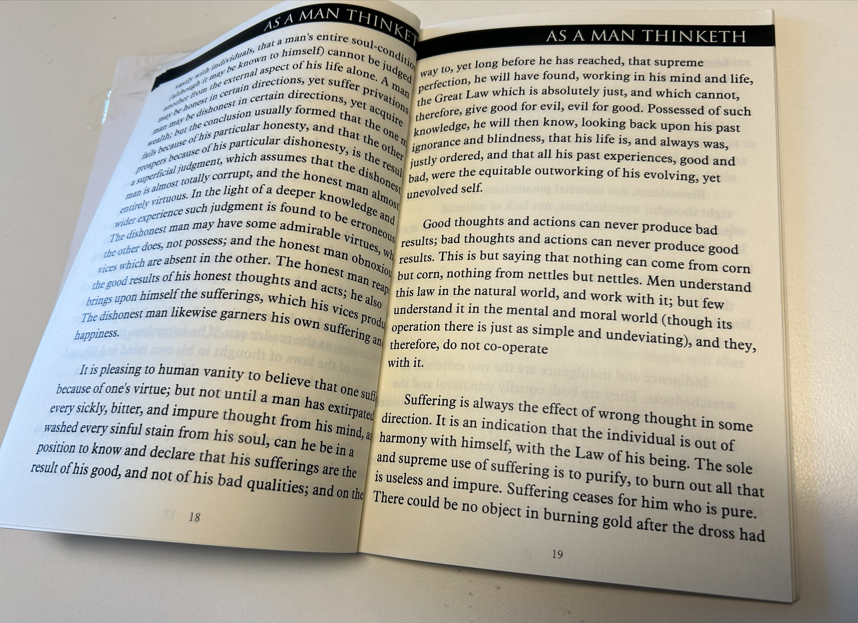
Book with gutter loss.
We’ve seen this so many times and it makes the book look silly. Not only that, its impossible to read. Gutter loss is where the interior typesetting does not allow enough space in the inside margins. When the book is bound some of the text is obscured. More about gutter loss: Printmybookaustralia.com.au
3. Bizarre page structure
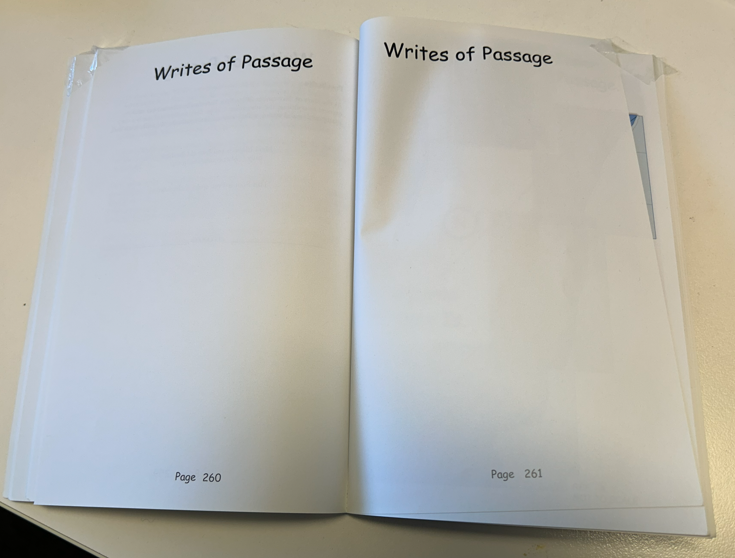
Weird blank pages and odd setup.
We’ve seen books with very unusual structure – the order of the various sections – often reinvented by the author themselves. The problem with this approach is that the reader can be easily confused. Book publishing has benefited from the structure of books being codified or defined over centuries. Everything has its place and this standardisation helps readers navigate through a book with familiar ease. One author presented their book with the Author Biography at the front of the book reasoning that ‘people won’t be that interested in the book but they should be interested in me.’
We recommend any author with ‘new innovative’ page ideas should first have a look at the New Hart’s Rules – The Oxford Style Guide. For over a hundred years, Hart’s Rules has been the authority on formatting of publications, but we see authors doing their very first book somehow knowing better. The result is invariably a weird and unprofessional book.
4. Wrong or draft manuscript used
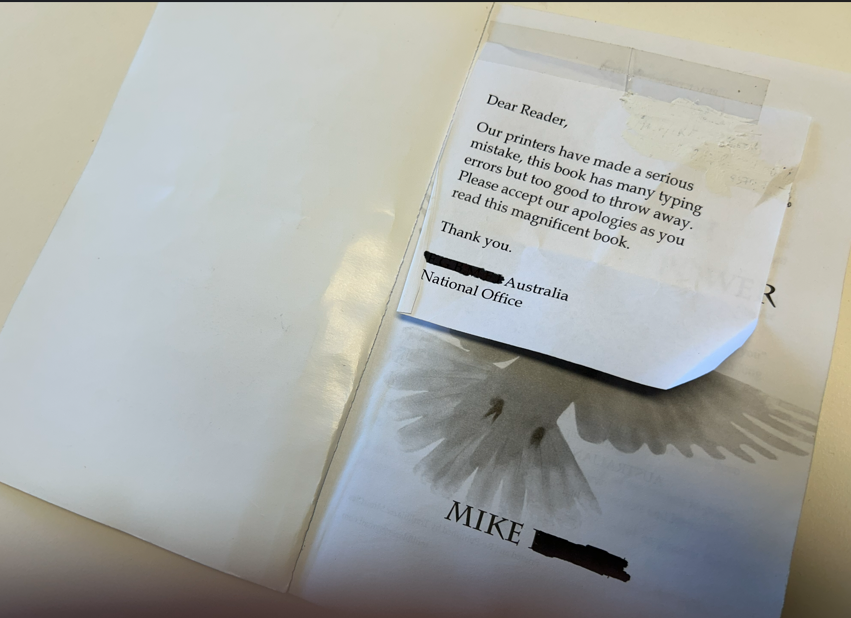
Publisher gave wrong manuscript to the printer
We’ve got many examples of botched books that have been designed and printed using the wrong manuscript or artwork. Usually the affected author is indignant that the book contained the old manuscript (which is normally littered with errors). We ask ‘how did the book producer get the old manuscript?’ and the answer invariably is ‘I sent it to them’. What normally happens is a disorganised author will send numerous versions of the manuscript with the same file name. Should a print error come as a surprise? In this instance the publisher blamed the printer… “our printer has made a terrible mistake”.
In the instance at left the author sent numerous different PDF files (all supposedly ‘finished art’ exported from Word) to the printer and the printer should have used the 5th one sent not the 6th one. In total the printer was sent over 50 emails over a 7 month period. The author remarked to us “I sent so many emails, and they still got it wrong”. Obviously the author took no responsibility for the chaos they had created. And it seems they didn’t even examine the proof copy provided before the big print run. The result – an embarrassing book filled with several hundred terrible spelling and grammatical mistakes.
5. An unprofessional self-publishing company
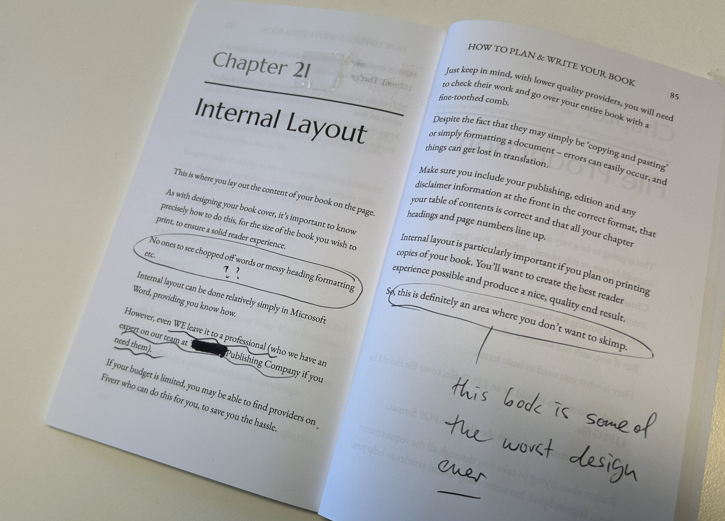
A self-publishing company’s own book where they ignore their own poorly written advice.
Aspiring authors who decide they need help often seek a fee for service self-publishing company. The problem is the internet is littered with scammers, mediocrity, underpowered start-ups, small scale 1-2 person companies who don’t have specialists. They might be graphic designers posing as publishers or aggressive marketers who are based in North America and use designers in Bangladesh and call centres in the Philipines.
Here is a book put out by a somewhat genuine Australian start-up who quite obviously have little expertise. Their own book on how to self-publish is one of the most poorly written and designed books we’ve ever seen. An author who was a victim of the company, gave this to us incredulous that they promised so much and delivered so little. The language is poor and mistakes overt – but the very ‘green’ inexperienced author fell for it not being able to see the shortcomings.
Featured Blog Posts:
The Cathartic Memoir – I’ve journeyed from contempt to enthusiasm
If I was running a 45 minute training session for indie authors what would be on the curriculum?
Here an experienced indie author publisher shares 4 topics every aspiring self-publisher needs to know.
Self-publish your book by raising funds through crowdfunding
You can fully finance you project (and more) if you apply the necessary effort.
Is Goodreads good for authors?
Estimated reading...
What is typesetting?
Estimated reading...
Social media marketing for authors
Social media...
Have you got the book hierarchy blues?
Estimated reading...
The economics of selling your book
Estimated reading...
What 99.9% of authors don’t know.
Estimated reading...
Three tips for drafting your own work
Estimated reading...
Featured Blog Posts
The Cathartic Memoir – I’ve journeyed from contempt to enthusiasm
Why write and publish a memoir? Will anyone be interested?
If I was running a 45 minute training session for indie authors what would be on the curriculum?
Here an experienced indie author publisher shares 4 topics every aspiring self-publisher needs to know.
Self-publish your book by raising funds through crowdfunding
You can fully finance you project (and more) if you apply the necessary effort.
Is Goodreads good for authors?
Estimated reading...
What is typesetting?
Estimated reading...
Social media marketing for authors
Social media...
Have you got the book hierarchy blues?
Estimated reading...
The economics of selling your book
Estimated reading...
What 99.9% of authors don’t know.
Estimated reading...
Three tips for drafting your own work
Estimated reading...
Interested in publishing your book but unsure where to start or what is even involved? Tell us about your project and we will post you a copy of our:
The Little Book of
Big Publishing Tips.
In just a quick 8,000 words, this little book will equip you with the knowledge you need to successfully publish your book.
The Little Book of Big Publishing tips goes into the essentials of self-publishing a book, outlining the business and financial side of publishing, legal issues, design, editing, sales and marketing. There's even a section on how to identify a vanity-publishing scam.