No Results Found
The page you requested could not be found. Try refining your search, or use the navigation above to locate the post.

 Estimated reading time: 5 minutes
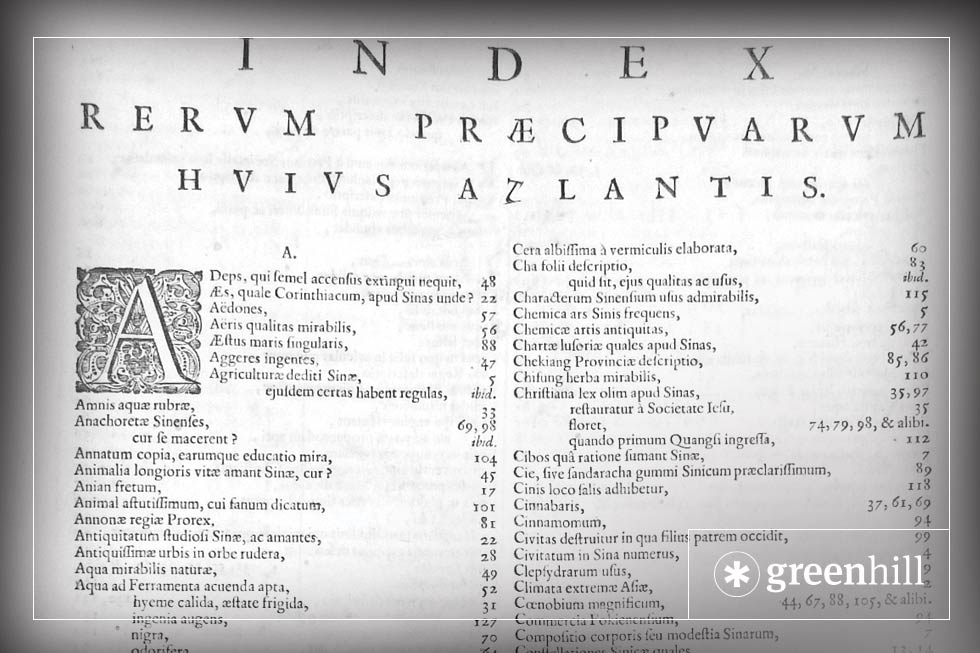
Book indexing is a hot topic in the world of self-published books. Whether your book needs indexing is often dependant on factors like the genre and form, but there are other things to consider as well. Do you want to make your book look not self-published? If the answer to this question is yes, then indexing is likely for you.
Indexing takes effort. But it doesn’t have to be excessively expensive or time-consuming. The value an index will add to a book should not be underestimated. It should be considerd an investment in producing a good quality book.
The first question you need to ask yourself is what sort of book are you planning to publish and do those books usually have indexes?
If your book is fiction, then you won’t need an index. That’s because indexes are, at their most basic, navigation devices. While a work of fiction is read from front to back, non-fiction are often used as reference works where the reader will be wanting to find a specific piece of information on a specific topic.
Sometimes if a reference piece is only short, like Green Hill’s The Little Book of Big Publishing Tips, an index isn’t a requirement. Our book is just 8,000 words spread across eight chapters. The chapter names are unambiguous, so the contents page which includes sub-sections seems more than adequate.
These sorts of publications don’t need an index, but as a publication’s complexity increases with more detailed and complex content, an index becomes necessary. For long reference works with perhaps thousands of topics, an index is indispensable.
Indexing a book is useful. A quality index provides readers, publishers, and authors many benefits:

Indexing a book helps readers navigate to information – it’s like a map
There are many sorts of indexes used across the information sphere. For example, a library will have a catalogue which is ever-growing to accommodate new content.
A ‘back-of-book’ index deals with a single published work rather than the corpus or the total of all produced/written works. A ‘back-of-the-book’ index identifies all significant major and minor topics.
An indexer is a publishing professional who specialises in producing indexes for books. Indexing can be technical, so employing a professional indexer is the best way to produce a quality outcome.
The indexer’s task is to analyse concepts, principles, events, and people in the text of a book and to produce a series of headings with referenced page numbers.
These headings should:
Books that have complicated information might need both a main entry and subentries. But even for the most complicated books, subentries within subentries should be avoided as they create cognitive difficulty for readers.
Green Hill has two highly proficient indexers. They are incredible and their fees may be quite a bit less than you think. Enquire with us today to get a quote on your indexing project.
Green Hill is a technologically agile new-breed publishing company. This means we are committed to automation. We often describe Green Hill as a book factory staffed by artisans. This means if we can automate any process without a reduction in quality we will. Elon Musk, the owner of Tesla is famous for saying “first I see if we can automate, second I see if we can eliminate” (paraphrase) any process.
Often automated indexing is an increase in quality because it removes potential for human error.
While totally ‘automatic’ generation of an index is still a little way off (see artificial intelligence) – it still needs human judgement, part automation has long been a reality.
When you publish a book through Green Hill we can show you how to implement embedded indexing (EI). This technique is where hidden text is input into a document identifying concepts, terms, people and places to be included in an index.
As a self-published author this is an ideal way to generate a powerful index without the expense of using an indexer.
The page you requested could not be found. Try refining your search, or use the navigation above to locate the post.
The page you requested could not be found. Try refining your search, or use the navigation above to locate the post.

Estimated reading time: 10 minutes
1. What is editing for self-publishing books in Australia?
2. Development/Structural editing for self-published books in Australia
3. Copy editing for self-published books in Australia
4. Proofreading for self-published books in Australia
5. What is good editing?
6. How self-published authors can find an editor in Australia
7. When should a self-published author start to edit their book?
8. Can a self-published author edit their own book?
9. Conclusion
Whether self-publishing or traditionally publishing, editing is extremely important to your book’s success.
The process of editing is revising and/or correcting written content (like your manuscript) to improve the quality, accuracy, and readability of the text. This can include grammar, punctuation, structure of the content, and fact-checking.
Editing a book can take place at various stages in the publishing process, including before sending your book to a publisher and after the manuscript has been accepted. However, editing needs to be completed before any final changes have been made to files and before printing is organised.
There are different types of book editing depending on the state of the manuscript.
Structural editing focuses on the overall structure and organisation of the manuscript. For this reason, it is an in-depth form of editing which involves looking at the bigger picture and making recommendations on how to improve the overall flow, pacing, and coherency of the story.
A structural editor will examine whole manuscript and address things like:
Following the observations that the editor has made, suggestions will be provided on how to improve the manuscript. This can include cutting out unnecessary scenes and dialogue, moving parts of the story around, adding new scenes, and much more. The editor’s goal in structural editing is to assist the author to create a cohesive, well-structured, and engaging story that will appeal to many readers.
Copy editing focuses on the fine details of a manuscript, such as grammar, punctuation, spelling, and consistency. Generally, the goal of copy editing is to ensure the manuscript is error free and easy for a reader to follow.
A copy editor will:
Copy editing is completed after manuscript structural editing, but before proofing, typesetting, and printing. It helps to ensure that the manuscript is polished before it gets into the hands of readers! The editor will work with the author to make sure the manuscript is clear, concise, and error-free.
Typically, proofreading is the final stage of the editing process. This is because it focuses on catching any remaining errors to polish up the manuscript for publishing. The goal of proofreading is the ensure the manuscript is as error-free as possible and that it presents well for readers.
During proofreading , the editor will:
Normally, proofreading is done once the manuscript has been copyedited. The editor will review the manuscript one final time, looking for minor errors that may have slipped through. With this in mind, proofreading should be done on the final manuscript, i.e. the version intended to be published.
Good editing is the process of improving the overall quality and accuracy of a manuscript to ensure it is not only clear, cohesive, but also engaging for the intended audience.
A good editor will:
Good editing is a collaborative process between the editor and author where the editor provides feedback and suggestions to help the author make the manuscript as good as it can be, while keeping the author’s voice and style intact.
If you are looking for an editor, Green Hill recommends contacting our editing partner Bookmark Edits
Green Hill Publishing can help you find an editor to suit your needs through our editing partner, Bookmark Edits.
However, if you would like to search around to find your own editor, below are some tips on how to choose one suited to your project:
When looking for an editor, it is important to consider the editor’s experience and qualifications.
It is always a good idea to get a sample of editing to ensure you’re happy with the quality of work before you go any further. It is also good to talk with the editor to make sure you are comfortable with them. Ask questions about their editing processes, experience, and pricing before you make a decision.
The best time to edit your book depends on a variety of factors, such as your writing process and personal preferences.
However, there are a few guidelines which can help you decide on when to begin the editing process.
Ultimately, the best time to start editing your manuscript is when you feel that you are ready. This will vary depending on each writer, but it is important to make sure you take the time to revise and edit your manuscript so it’s the best it can be. It is also important to make sure you are giving your publisher the final manuscript before any design or typesetting takes place.
Self-editing your book can be a challenging process, but it can also be rewarding. Below are some tips we’ve put together to help you ensure you have self-edited your book effectively:
Editing is one of the most important things when it comes to publishing your book. You need to be confident in the work that is being put out into the world, and the work needs to be polished and final before being released. There are many different types of editing to consider. The one you need varies from author to author as it depends on what your needs and wants are when it comes to your manuscript. It is important that, when beginning to edit your book, the manuscript is the final draft.
Remember: editing is a useful tool, and any feedback is useful and may lead to the success of your book. Finding an editor that suits your writing style, genre, and needs is important, too.
Here at Green Hill Publishing, we have a fantastic editing partner who will help you find the perfect editor for your manuscript. Bookmark Edits provides our authors with great service and a quality product. Reach out to us if you have any questions or if would like more information on how to contact our editing partner.
The page you requested could not be found. Try refining your search, or use the navigation above to locate the post.
The page you requested could not be found. Try refining your search, or use the navigation above to locate the post.

Estimated reading time: 4 minutes
The COVID pandemic has started to ease. But now it’s war in the Ukraine and tensions in the Middle East and Asia. You might think that as a self-published author in Australia you’ll be unaffected. But that’s not the case. Our present world has impacted on the cost of self-publishing a book.
For example some of our authors that we quoted on book printing 18 months ago, have been surprised that we can’t meet those prices any longer.
Here’s a quick update on where things are at.
Self-publishing companies have been hit hard financially. We’ve seen quite a few Australian suppliers leave the industry. A host of international publishers have disappeared as well.
This might seem tragic, but it has weeded out international book publishing scams and local small operators. Many of these operators – often one-, two- or three-person operations, simply couldn’t provide a full service or quality anyway.
Unfortunately, we’ve been contacted by a few Australian authors who have had their suppliers disappear. This was after they had made some payments. One author had their book design completed but because the publisher had ‘shut up shop’ was left stranded with no print and distribution. Ouch! The lesson is: stick with companies that are here for the long term.
Costs of self-publishing a book have been impacted by:
Green Hill has a great Asia based book printing solution. This gives authors opportunity to get quality books at a great price. But authors printing a book in Asia, while cheaper, have been impacted by the cost of getting the book to Australia. Freight has added to costs of self-publishing a book.
The page you requested could not be found. Try refining your search, or use the navigation above to locate the post.
The page you requested could not be found. Try refining your search, or use the navigation above to locate the post.