

I was recently asked to construct a 45 minute presentation to a group of 30 indie authors – representing a broad spectrum of ability, experience and aspirations. For some of these authors it might have come at the end of many, many hours researching self-publishing on the internet. Some had already failed. Others had enrolled in an infamous write-your-book-in-one-week-aboard-a-cruise-ship scam or similar 5-star-resort scam. For others it might have been the start of their journey to publish their writing.
Many authors feel the need to gather as much information as possible to educate themselves on their coming project. And here I was being asked to help educate aspiring authors.
Because there are so many ‘moving parts’ in a publishing project I said to myself, ‘what could I expect to achieve, and what real value would it be to authors?’ ‘If I just had 45 minutes to advise authors what would I say?’
A colourful memory was a visit from a writer who had been trying to self-educate herself on self-publishing. Her methodology was to search online and extract lists of each company’s offerings. Green Hill a has a list of offerings – and so do many suppliers. She had a spreadsheet with each benefit in a column and company names across the top and a score against each item. I really do understand why she approached us in this manner – its because there are so many scams, rip-offs and a bewildering array of offerings. She couldn’t afford to choose a bad supplier and this was her strategy!
‘How many free books do you include?’ she probed. I felt I was in the dock in court. ‘Ummm. None, there no such things a free books’ I said defensively trying to squeeze a plausible explanation in before the next question. ‘OK’, she said sounding like an expert, more like ‘Ooookaaaay” capped by a ‘tutt’ and a slight shake of the head and a cross on her clipboard. ‘XYZ Publishing do free editing” she announced. ‘Do you do that?’ not realising that the ‘editing’ on offer wasn’t editing at all but a crude spelling and grammar check. For these ‘fully-researched’ aspiring authors there almost no reason for us to even try to provide our service – it’s just too hard trying to work for a fully-researched know-it-all.
And every time we get contacted by authors who have been scammed or at best paid for a sub-standard project out come, they assure us they had spent many hours researching their choice of supplier.
So my conclusion and approach here, is that authors are seeking answers to the wrong questions.
So here goes. Here’s my top 4 topics.
 Estimated reading time: 5 minutes
Topic 1. The manuscript, the manuscript, the manuscript.
It’s so integral to the book’s success. Often we have authors come to Green Hill seeking a range of service to see their book successfully published. But nothing can beat a great manuscript. That includes a book concept that will fly (and not sink like a stone).
No matter of great book design, fancy print treatments or powerful metadata will project a book onto the sellers list.
Successful authors have identified a need in the market and have crafted a powerful book concept. It’s powerful because it gets traction or has an impact. An impact can result from:
- a compelling idea that hooks readers – it might resonate with them on a deep level
- originality – it might be a unique book, something that’s never been published before, at least a new take or a twist on an old topic
- relevance – solves a current or emerging problem, or raises and expounds upon a current issue. What are people talking about?
- And of course a well written and engaging narrative.
No matter how nicely designed or how well printed and how extensively marketed, these elements won’t fix the problems created buy a poor manuscript.
Topic 2. Metadata
Book sales are downstream from findability. If retailers and/or readers can’t find your book they can’t buy your book.
Metadata is data about data — information that describes, explains, or gives context to another piece of data. Metadata tells you what something is, where it came from, how it’s used, or how it should be handled. Book metadata includes (among other things) book title, author, ISBN, page count, dimensions, publication date and the publisher.
A lot of metadata remains unseen by potential buyers, but by no means are they unimportant. ISBNs and metadata directly influence a book’s availability and searchability – broadly termed findability. These elements make a book findable by both retailers seeking to stock a book and readers looking for how they can purchase a copy. Every book that finds its way to market must have an International Standard Book number (ISBN). This is the thirteen number code located on the back of the book above and below the barcode and also on the inside on the legal/copyright page. An ISBN is crucial to selling and marketing as it is a unique number that allows the book and its metadata to be easily located.
Metadata isn’t just about the data attached to ISBNs but it can be data on other book industry databases.
Topic 3. Design the book
Three seconds. That’s all the time you have to convince a reader to pick up your book in store or click on your book online. You couldn’t possibly convey the whole plot in that short time limit, and simply stating the genre isn’t enough. So, what can you do? This is where book designers come in.
- A book’s interior design effects how readers interact with and consume a book.
- Book architecture focuses on the internal structure of a book:
- Front matter: half title page, frontispiece, title page, accolades, copyright page, dedication, table of contents, epigraph, foreword, preface
- Main body: introduction, prologue, part opening page, chapter opening page, chapters, epilogue, conclusion, afterword, postscript
- Back matter: acknowledgements, about the author, copyright permissions, discussion questions, appendix/addendum, chronology/timeline, endnotes, glossary, index, bibliography/reference list, ad for services
- Book architecture focuses on the internal structure of a book:
- Think of a book cover as a single piece of 3D artwork that spans three faces: the front cover, the spine, and the back cover. These three faces are the first spokesperson for your book, and all interact with readers in different yet important ways.
- The front cover is the first face of your book, and the thing that stays in people’s minds.
- The spine is considered the second face but is usually the first thing readers see when browsing bookshelves.
- The back cover is the third face of a book and hosts the remaining important information like blurb, ISBN (International Standard Book Number), barcode, and any other elements such as publishing logo, RRP (Recommended Retail Price), contact details, and reviews.
- These three faces come together to convey one simple thing: the message of your book.
- The biggest mistake an author can make in the design process is to think that the designer has their own agenda and is working against their success as a published author.
- Being able to articulate your ideas and constructive criticism effectively will be helpful not only for your designer but for you as well.
- One of the most important conversations you’ll have with your designer is the design brief.
- The brief that you give can be a written list of ideas, an out-loud conversation with them, or perhaps a visual representation (mock-up) which roughly outlines your ideas.
Part of design is considering how your book will look printed, including the cover, the interior, right down to the paper.
The very best book designers understand that a book is a physical, 3D product, not just artwork on a screen.
Topic 4. Build an author platform
‘Author platform’ is a term commonly used by publishers to describe an author’s presence both online and within their own community. Before taking on an author, traditional publishing companies will ask, ‘what platform do you have and what are your follower numbers?’ This is because you will be able to use any existing platform to sell your book to and help get the word out.
Books sell because the author has a ‘platform’.
Having an established author platform can look like many things, including:
- Being a public figure
- Having been featured in the media (in either a positive or negative light)
- Currently or previously being a sporting icon
- Maintaining a large number of social media followers (upwards of 1,000)
- Winning a prestigious and well-known award
If you don’t identify with any of these, you’ll need to get started on building your author platform. Social media is a great place to start.
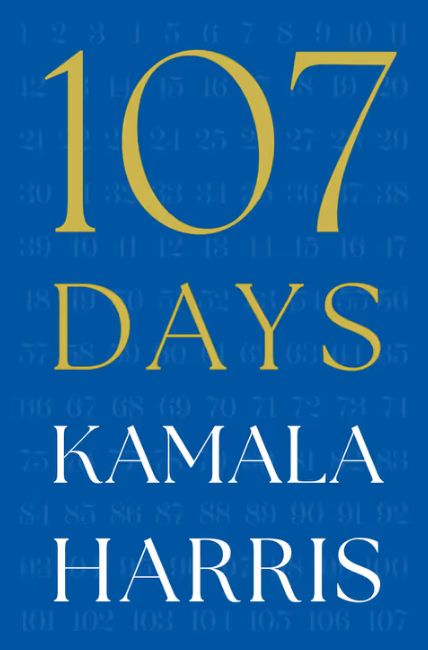
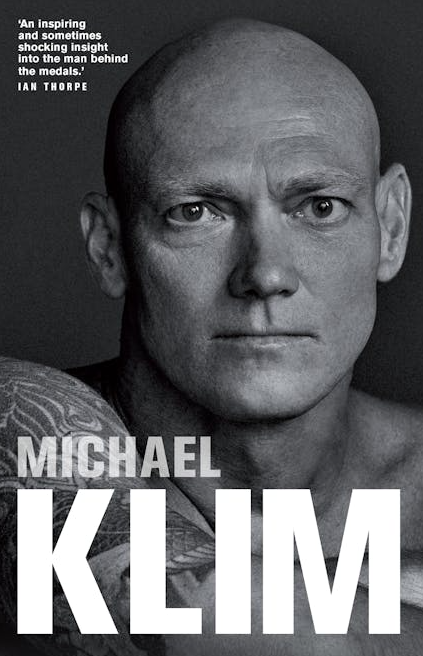
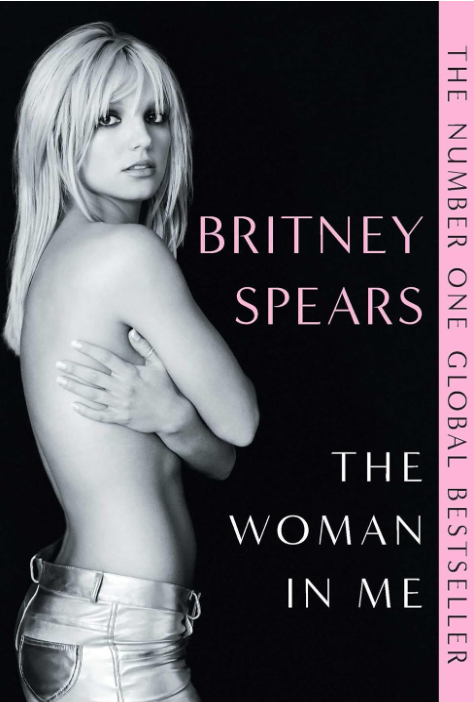
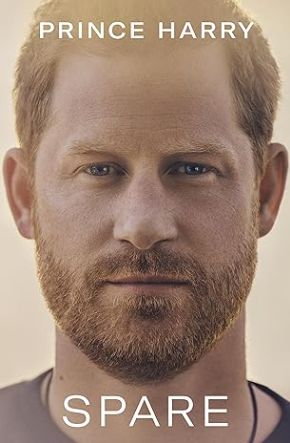
To illustrate just how important an author platform is consider these books. One book was described as ‘a frustrating slog’ but sold over 500,000 copies. Notice how Harris’ and Klim’s book are all about the author name. And of course photos of recognised faces are important. Harry’s book sold over 3.2 million copies yet he didn’t seem to have a lot to say of much interest.
Harris
Klim
Spears

Harry

Featured Blog Posts:
Self-publish your book by raising funds through crowdfunding
You can fully finance you project (and more) if you apply the necessary effort.
Is Goodreads good for authors?
Estimated reading...
What is typesetting?
Estimated reading...
Social media marketing for authors
Social media...
Have you got the book hierarchy blues?
Estimated reading...
The economics of selling your book
Estimated reading...
What 99.9% of authors don’t know.
Estimated reading...
Three tips for drafting your own work
Estimated reading...
Featured Blog Posts
Self-publish your book by raising funds through crowdfunding
You can fully finance you project (and more) if you apply the necessary effort.
Is Goodreads good for authors?
Estimated reading...
What is typesetting?
Estimated reading...
Social media marketing for authors
Social media...
Have you got the book hierarchy blues?
Estimated reading...
The economics of selling your book
Estimated reading...
What 99.9% of authors don’t know.
Estimated reading...
Three tips for drafting your own work
Estimated reading...
Interested in publishing your book but unsure where to start or what is even involved? Tell us about your project and we will post you a copy of our:
The Little Book of
Big Publishing Tips.
In just a quick 8,000 words, this little book will equip you with the knowledge you need to successfully publish your book.
The Little Book of Big Publishing tips goes into the essentials of self-publishing a book, outlining the business and financial side of publishing, legal issues, design, editing, sales and marketing. There's even a section on how to identify a vanity-publishing scam.
