No Results Found
The page you requested could not be found. Try refining your search, or use the navigation above to locate the post.


 Estimated reading time: 8 minutes
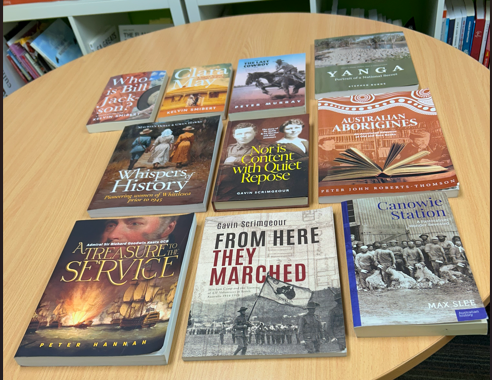
Here’s some invaluable tips for writing that history book you’ve been planning, from Green Hill’s own Adelaide based Richard Maerschel.
When you decide to write, don’t expect that background information will be on the internet in more than superficial depth. Even basic information on the net is often wrong, not deliberately but because, unlike you, the writer might be too quick to get a story out, often using documents perhaps a century old which might have been wrong in the first place. My own family records have examples of such errors.
I feel lucky that I have always kept books and a lots of notes on things important to me. I also feel lucky that forty years ago I asked my old aunty to sit down with me and her numerous photo albums – she told me names and I wrote them on the backs of photos. My main my point is Don’t rely on memory which inevitably loses accuracy and completion over time.
Trove is very good at preserving old newspapers and making them freely available on line, but they stop at 1954, and that is now more than seventy years ago and receding further every day. State libraries and archives hold a vast amount of material, but the funding of our State Library is being squeezed so that expertise to help you and me find what’s there is diminishing, and quite rapidly.
Newspapers are shadows of what they used to be, so the little things going on in daily life are no longer in the papers but on our phones and tablets. Those records may be a 100 times larger than what we used to read in the papers, but they are too fragile. When a phone is lost or is thrown out when someone dies, the photos and text messages are usually lost too. The same happens with emails when we change computers or even update software that took charge of everything that we wrote on our keyboards and received on our screens.
Marriage isn’t what it used to be, and neither is our old way of children taking their father’s surname, so your descendants will probably have a hard time doing family histories because the line of names will be hard to find and decipher.
When you are writing about history, your work gains its main value after you get inside the minds of people living in those times. Their ideas about society might be a world away from your ideas, but unless you can see their world from their times, your critical evaluation will be defective. Old books are invaluable. If you haven’t got your own, go a library and ask questions, and be prepared to go down roads less travelled to find answers to what you want to know.
O’Connells, Old and Rare Books, and Michael Treloar are mines of old books and photos, but they are more focussed on collectors rather than writers. If you want information rather than an expensive rare book, I suggest suggest that you think about the relevant locality. If your story is based in Adelaide suburbs, go to the local library for relevant records, maps, photos and the like. In recent time I’ve turned up sources valuable to me from Aldinga and Mount Gambier libraries. The custodians there love to think that people from Adelaide want their help, and those same people are usually involved in local museums run by the National Trust and district councils, so there is a good chance you’ll get more than you are expecting. Also, when you travel, drop into any place that advertises old books.
Three of my most valued books I bought interstate, one from Maryborough in Victoria, and two from Berrima and Uralla in NSW. It is essential that you keep your eyes and mind open to finding information in unexpected places
The digital technology which drives our screens – cinemas, computers and phones – is now so good that it often makes any photo more than five years old look below par, even miserable. Wonders of enhancement and removal have now descended out of the realm of touchup artists into the hands of you and me or, more particularly, our kids and their children. This is bad news for us who write history books because the old pictures we are forced to use look bad and worse against the expectations of what anyone can get, even out of a cheap mobile phone.
The good thing is that the technical advances which present us each day with high quality images we might have just taken also enable us to improve old pictures, even though they may be the third or fourth in a series of copies out of a book. Light and shade, clarity, and blemishes can all be made to look better using software which keeps coming out of the same smart minds as the imagery on our screens.
But improving old photos can take a lot of time and money, and there is the risk that the final image looks too good, lacking the warmth and charm of an old defective photo. AI will never match what the old camera tried to do but missed, but the compromise available now and into the future should enable us to present impressive pictures.
For too long I put off writing a whole lot of stuff which had been running around in my brain for decades. I had jobs which kept me too busy to give time to writing. Writers like actors, musicians and sports people, are countless in number, but very few get to the point of fame and riches, so don’t wait for that to give you lots of leisure time. Get on with your writing, make enough money to keep body and soul together, and your writings will bring you satisfaction whether the world values them or not.
Richard Maerschel ~ richard@greenhillpublishing.com.au
The page you requested could not be found. Try refining your search, or use the navigation above to locate the post.
The page you requested could not be found. Try refining your search, or use the navigation above to locate the post.


‘Do I really need to style my manuscript?’
Many authors ask this question and the answer is simply, but emphatically, YES! Manuscript styling expediates the process of publishing your book. Publishing consists of many dynamic parts, and streamlining even one can positively affect your timeline. Of course, ensuring that the content of your book is laid out in a logical and readable manner is the largest and most time-consuming of those components, and can be unique to each project, so it makes sense that manuscript styling falls to the author.
Estimated reading time: 6 minutes
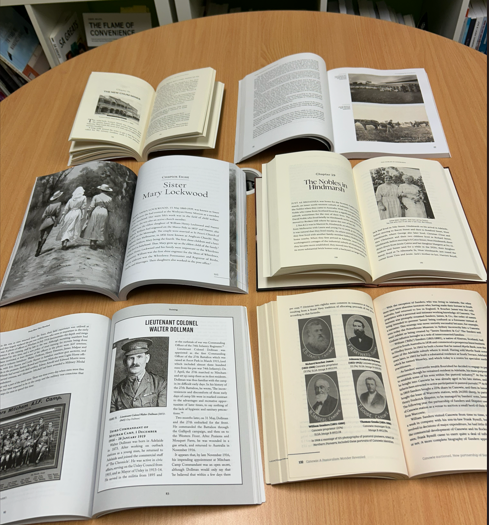
After your manuscript is submitted, our designers need to arrange the manuscript in a specific style, including how the text appears on the page, spacing, fonts, and the placement of images. The goal of this is to make the book easy to read and visually appealing to the reader.
The technical aspects are critical to the visual layout of the content and will vary according to the length of the book, genre, and even print format. These aspects also influence how the typesetters (designers) will determine the trim size (book size), the margins (how much white space is visible around the text), and the font’s typeface and size. However, many other technical matters must be taken into consideration, to—very importantly—invoke the intended mood of the book using the setting, period, and theme.
While typesetters seem to perform magic, They Are Not Mind Readers. Without those styling indicators, it can be difficult for them to tell what should be a heading, a subheading, quotations, or regular text. Without clear and consistent styling, the typesetter’s manual workload is increased, therefore increasing the time typesetting takes and prolonging your project.
Green Hill Publishing provides a Word template for you to copy and paste your manuscript into and style to your preferences. With even basic Word styling to start with, then application of the Green Hill template, the document mapping and typesetting processes will be more refined, saving time and getting your book ready for printing and distribution quicker.
Why does Hierarchy matter? In short, organising your content into levels of importance, or hierarchy, gives readers a clear sense of the flow of the book. Headings and subheadings are especially helpful cues for both your designer and your readers. Defined structure helps designers produce a more polished and accurate layout.
Readers will benefit from understanding what you have written and what has been quoted from another source, what is regular text and what you wish to emphasise, and so on. Without styling, all content will blend together. There are some Hidden Benefits to styling your manuscript, such as improving accessibility, making revisions quicker and easier, and significantly speeding up the typesetting processes.
Perfection is not the aim here. Smoothing out the process is.
Obviously, aiming for perfection and even styling as you go could stifle your creative rhythm. For that reason, focus on getting those words out on the page, expressing yourself, and enjoying it as you do it. There will be time for styling and re-drafting once you have transformed your thoughts and ideas into content.
Also, you really don’t need to be a wizard with Microsoft Word. Have a play around with the Styles pane at the top of the Home tab in Word, and search YouTube for beginner tutorials. It can be fun!
After your manuscript has been formatted, it may look quite different but don’t panic, the designers will go back to your original to determine your intended layout, and there will be opportunities to discuss.
The steps for styling your manuscript:
No one wants to limit your creativity or change your message. That is not the purpose of styling.
Green Hill Publishing are here to help bring your vision to life, and making sure that the process runs as smoothly as possible, and consequently ensuring it happens quicker.
The page you requested could not be found. Try refining your search, or use the navigation above to locate the post.
The page you requested could not be found. Try refining your search, or use the navigation above to locate the post.
Estimated reading time: 5 minutes
Your writing is perfect. The world needs to hear your voice. You have a unique style that is new and fresh. You’ve written a book—why should you let anyone diminish your tone?
Let’s talk about editing.
To talk about editing, you first need to realise that you’re not special. I’ll repeat that: you’re not special. People have been writing for thousands of years. You’re not new. The world will continue if you write or don’t write.
That is not meant as a downer. Writing something that someone wants to read is a noble pursuit. There is nothing more rewarding as a writer than when someone tells you they enjoyed your book. However, this is about editing, so buckle up.
For a start, editors don’t write the book, you do. The essence of every book contains every author’s own style. Whether you are writing a novel, a children’s book or a family biography, they all contain the author’s particular style. However, they all need editing.
There are several types of editors. A lot of them have different names which all mean the same thing. The first person you need is the structural editor. This is the person who will read your manuscript and tell you if you are making sense. The next, a copy editor who highlights all your mid-picture inconsistencies and wrongdoings. The last one is the proofreader who makes sure the full stops and commas are in the right place.
The common misgiving is that a new writer thinks they don’t need to be edited because they have got everything right. That first draft is perfection, right? Wrong.
The other misgiving is that an editor will change their voice somehow. Also wrong. This is not what an editor does.
Consider this: does Stephen King have a particular style? Does John Grisham have a particular style? Does Jane Harper have a particular style? Obviously, the answer is yes. And yet all of these great writers have editors. Go figure.
The reason is, when we write a first draft we’re putting words on the page (hopefully in a coherent way). The prose is often flabby and sometimes rambling. This is fine and perfectly normal. However, it needs to be edited.
So, as a writer you need to swallow your ego and get over yourself. Realise that you are not God’s gift to writing and find an editor that can and should be brutal on your work. A machete needs to be taken to every first draft. Sentences need to be tight and easily readable.
If you think your work does not require editing, then you are badly mistaken. Editing does not change your style or reduce your voice. On the contrary, it will actually enhance it. Find the right editor who ‘gets’ your work and let them work their magic.
As an example, I was given a self-help book by my sister-in-law that was written by a friend of hers. I read the first ten pages and said that the book had not been edited. My sister-in-law laughed and said that of course it hadn’t been because her voice was “not to be altered” apparently. The thing is, by reading those ten pages I could tell that it had not been edited because it read that way. There was no cadence to the sentences. There was no flow to how it read. It was hard work. I gave up after the ten pages because it was simply too hard. Every sentence jarred because it hadn’t been edited. It wasn’t tight. It wasn’t easy to read.
This is not meant to be a criticism. Anyone who takes the time and has the skill to write anything should be applauded and even nurtured. However, if you think you don’t need your work edited then you are living in a fool’s paradise. Keep writing.
The page you requested could not be found. Try refining your search, or use the navigation above to locate the post.
The page you requested could not be found. Try refining your search, or use the navigation above to locate the post.